Almond and oat exfoliating bar
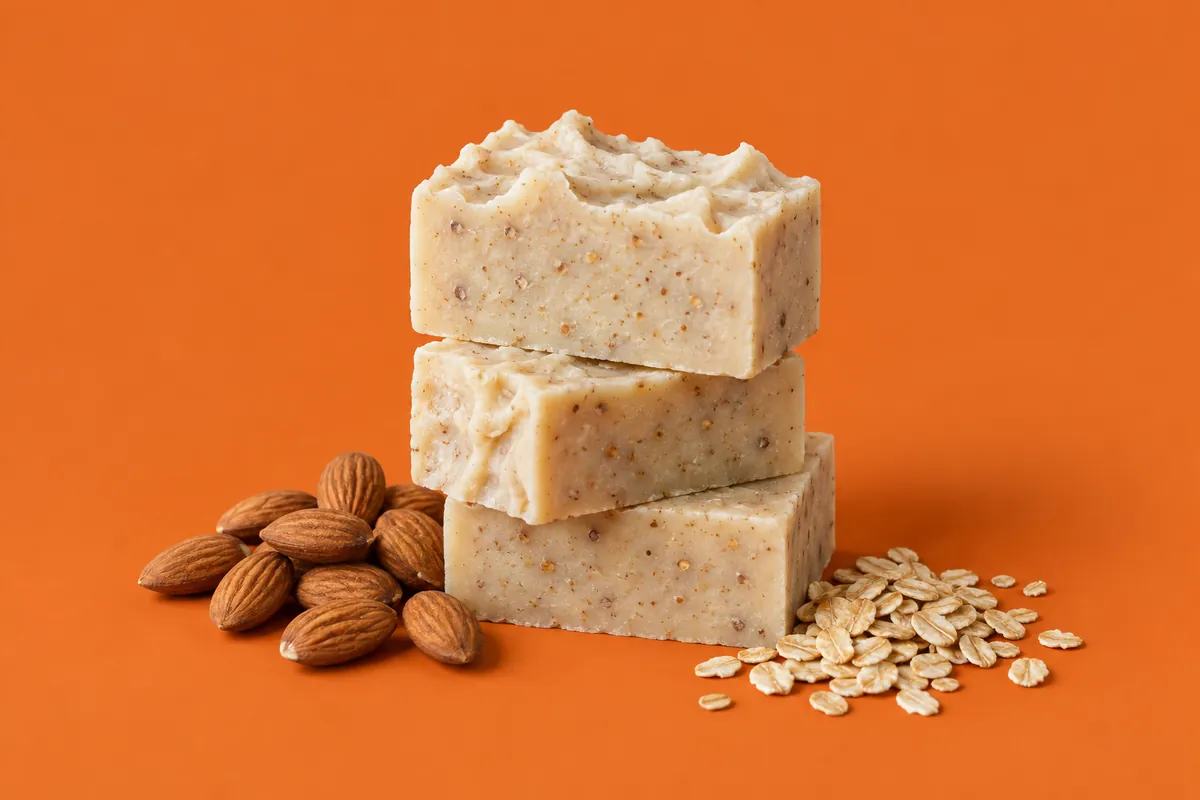
A gently scrubby body bar made with sweet almond oil and flecked with ground almonds and oats, scented with mandarin and cardamom. With almond in it twice over, it is not a bar for anyone with a nut allergy.
- Skill
- Beginner
- Method
- Cold process
- Batch
- 1000 g of oils about 1472 g of batter
- Hands-on
- 1 hour
- Cure
- 6 weeks
- Gel phase
- Either way gel or not, both work
What you need
For 1000 g of oils, which fills a 1.5 litre loaf mould. Weigh everything, liquids included.
| Olive Oil · 35.0 % | 350 g | 12.35 oz |
| Coconut Oil · 25.0 % | 250 g | 8.82 oz |
| Almond Oil · 15.0 % | 150 g | 5.29 oz |
| Shea Butter · 15.0 % | 150 g | 5.29 oz |
| Cocoa Butter · 5.0 % | 50 g | 1.76 oz |
| Castor Oil · 5.0 % | 50 g | 1.76 oz |
| Sodium hydroxide (NaOH) · the lye, 100 % pure | 138.0 g | 4.87 oz |
| Distilled water · for a 33 % lye solution | 280.2 g | 9.88 oz |
| Almond meal (ground almonds) · 2 tbsp, with the skins on for brown specks, blanched for paler ones | 11.9 g | 0.42 oz |
| Rolled oats, coarsely ground · 2 tbsp, pulsed to a coarse meal in a spice grinder | 11.5 g | 0.41 oz |
| Mandarin essential oil · 2.0 % of the oils, at trace | 20 g | 0.71 oz |
| Cardamom essential oil · 1.0 % of the oils, at trace | 10 g | 0.35 oz |
- Superfat
- 6 %
- Temperatures
- Lye solution and oils both at 35 to 40 °C (95 to 104 °F)
Method
-
Grind the oats
Pulse rolled oats in a spice grinder to a coarse meal, about as fine as breadcrumbs, and measure out 2 tablespoons. -
Get ready
Put on goggles, gloves and long sleeves, open a window or turn on the extractor, weigh every ingredient and line the mould. -
Make the lye solution
Sprinkle 138.0 g of sodium hydroxide into 280.2 g of cold distilled water, never the water onto the lye, and stir until clear. Keep your face away from the fumes and leave it to cool where no one will knock it. -
Melt the oils
Melt the coconut oil, shea butter and cocoa butter gently, stir in the olive, almond and castor oils, and let them cool to 35 to 40 °C (95 to 104 °F). -
Combine
When the lye solution is also at 35 to 40 °C (95 to 104 °F), pour it into the oils down the shaft of the stick blender and blend in short bursts to light trace, like thin custard. -
Scent it
Stir in 20 g mandarin and 10 g cardamom essential oil by hand. Spice oils can speed trace, so work on without a pause. -
Thicken and add the scrub
Blend a few seconds more, to medium trace, like pudding, then stir in the 2 tablespoons each of almond meal and ground oats by hand. In thinner batter they sink to the bottom. -
Pour
Pour into the mould, tap it on the bench to release air, and texture the top with the back of a spoon if you like. -
Cover lightly
Lay baking paper or a board over the mould but no towel, and leave it for a day. A warm loaf may gel, which is fine; wrapping it as well could overheat it. -
Unmould and cut
Unmould with gloves on after 24 to 48 hours, when the loaf is firm, and cut it into bars. -
Cure
Cure the bars on a rack with air around them for six weeks, turning them now and then.
Tips
- Sweet almond oil and almond meal are tree-nut products. Name them on the label and keep the bar away from anyone with a nut allergy; shea butter comes from a tree nut too.
- Grind the oats and choose the almond meal to suit the skin: fine for a gentle bar, coarser for hands and feet. Big pieces scratch.
- Almond meal with its skins on gives brown specks, blanched almond flour paler ones; both darken a little over the cure.
The oils
| Oil | Share |
|---|---|
| Olive Oil (virgin / refined / olive oil) | 35.0 % |
| Coconut Oil | 25.0 % |
| Almond Oil (Sweet Almond Oil) | 15.0 % |
| Shea Butter | 15.0 % |
| Cocoa Butter (Theobroma Oil) | 5.0 % |
| Castor Oil | 5.0 % |
How it is made
| Process | Cold process |
| Alkali | NaOH |
| Superfat | 6 % |
| Water | lye water at 33 % |
| Iodine value | 60 |
| INS | 146 |
Why make it
A body bar for people who like a little texture in the shower. Ground almonds and coarsely ground oats give a gentle scrub, softer than pumice or coffee grounds, on a balanced everyday base: cleansing 17 and conditioning 60 on our scale, at a 6 % superfat that the almond meal's own oil nudges a little higher. Oats have a long history in skin care, and colloidal oatmeal, oats milled very fine, is one of the skin protectants the US FDA recognises in leave-on products. Here the oats are coarse and rinse off within a minute, so they are there for the scrub, not as a treatment. Mandarin and cardamom are chosen for their warm, sweet smell. The caveat matters: with almond oil and almond meal in it, this is not a bar for anyone with a nut allergy.
Sources
- 21 CFR 347.10, Skin protectant active ingredients · US Food and Drug Administration, Code of Federal Regulations
What tradition, makers' experience and research say about soaps like this, each labelled for what it is. It is not medical advice, and no soap treats a skin condition: if you have one, ask a doctor or pharmacist.
What the numbers say
- Lauric acid 12.3 %
- Myristic acid 4.7 %
- Palmitic acid 9.9 %
- Stearic acid 10.0 %
- Ricinoleic acid 4.4 %
- Oleic acid 45.4 %
- Linoleic acid 9.8 %
- Other 4.9 %
Saturated : unsaturated 40 : 60
Computed from the fatty acids of the fats above. The bands are what the craft has settled on, not chemistry — a bar outside one is not wrong.
From the guides
All guides
Soap additives: salt, sugar, sodium lactate, clays, oats, silk and more
What common soap additives do, how much to use and when they go in: sourced doses for sodium lactate, salt, sugar, honey, citric acid, clays, oats and silk.
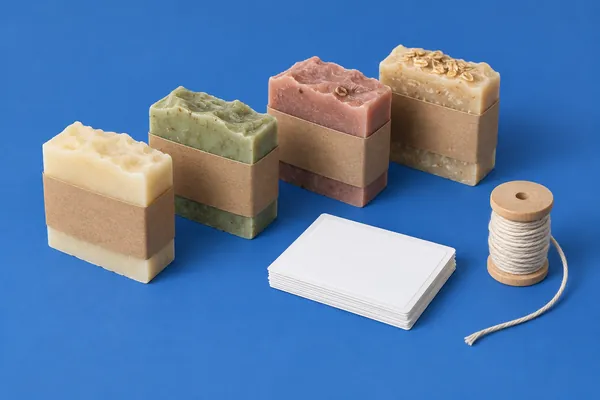
Labelling soap: US, EU, UK and Canada
What a soap label must say in the US, EU, UK and Canada: true soap or cosmetic, net weight, INCI list, allergens, and the claims that make soap a drug.
Where these proportions come from
Our own formulation: an everyday bar with 15 % sweet almond oil, a quarter coconut oil for lather and a fifth shea and cocoa butter for firmness, at a 6 % superfat, with ground almonds and oats stirred in at trace for the scrub.