Eucalyptus and spearmint shower bar
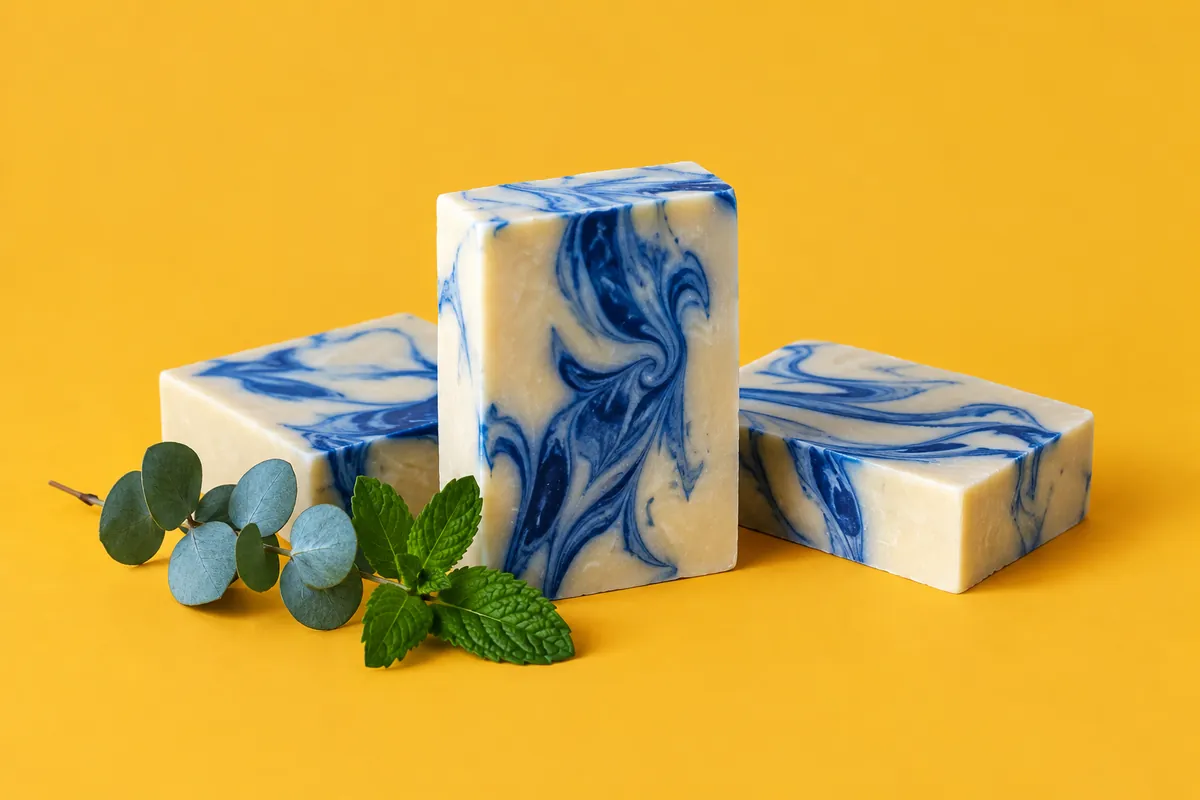
A fresh shower bar scented with eucalyptus and a touch of spearmint, with streaks of ultramarine blue dropped through an ivory base. The recipe traces slowly, which gives you time for the swirl, and the blue is a mineral pigment that stays true.
- Skill
- Intermediate
- Method
- Cold process
- Batch
- 1000 g of oils about 1494 g of batter
- Hands-on
- 1 h 20 min
- Cure
- 6 weeks
- Gel phase
- No keep it cool
What you need
For 1000 g of oils, which fills a 1.5 litre loaf mould. Weigh everything, liquids included.
| Olive Oil · 45.0 % | 450 g | 15.87 oz |
| Coconut Oil · 25.0 % | 250 g | 8.82 oz |
| Sunflowerseed Oil - High Oleic Acid · 10.0 % | 100 g | 3.53 oz |
| Shea Butter · 10.0 % | 100 g | 3.53 oz |
| Cocoa Butter · 5.0 % | 50 g | 1.76 oz |
| Castor Oil · 5.0 % | 50 g | 1.76 oz |
| Sodium hydroxide (NaOH) · the lye, 100 % pure | 139.1 g | 4.90 oz |
| Distilled water · for a 30 % lye solution | 324.5 g | 11.44 oz |
| Ultramarine blue · 0.75 tsp, stirred into 2 teaspoons of the recipe's liquid oils; for the blue portion only | 3.1 g | 0.11 oz |
| Eucalyptus essential oil (globulus) · 2.5 % of the oils, at trace | 25 g | 0.88 oz |
| Spearmint essential oil · 0.3 % of the oils, at trace | 2.5 g | 0.09 oz |
- Superfat
- 5 %
- Temperatures
- Oils and lye solution each at 32 to 38 °C (90 to 100 °F)
Method
-
Get ready
Open a window or turn on the extractor fan, send children and pets out, and put on splash goggles, nitrile gloves and long sleeves. Set a 1.5 litre loaf mould on a level surface, and have a second jug with a good spout, a whisk and a scale that reads to 0.1 g. -
Weigh everything
Weigh 250 g coconut oil, 100 g shea butter and 50 g cocoa butter into the pot, and 450 g olive oil, 100 g high-oleic sunflower oil and 50 g castor oil into a jug. Weigh 324.5 g of distilled water into the lye jug, 25 g of eucalyptus and 2.5 g of spearmint essential oil into a small cup, and the 139.1 g of sodium hydroxide last, into a dry container. -
Make the lye solution
Where air moves, pour the sodium hydroxide slowly into the water, never the water onto the lye, and stir until it turns clear. Keep your face away from the vapour and leave it to cool, labelled and out of reach. -
Mix the blue
Spoon 2 teaspoons of the liquid oils out of the jug into a small cup and stir in ¾ teaspoon of ultramarine blue until it is smooth, with no specks. -
Melt the fats
Melt the coconut oil, shea butter and cocoa butter on the lowest heat until just clear, then pour in the rest of the liquid oils from the jug. -
Blend only to emulsion
When the oils and the lye solution are each at 32 to 38 °C (90 to 100 °F), pour the lye solution into the oils and pulse just until the batter is smooth and opaque, with no oily streaks. Stir in the essential oils by hand and stop there: the blue has to sink when it lands. -
Colour a portion
Pour about 600 g of the batter into the spouted jug, add the blue oil and whisk until the colour is even. Leave the rest, about 900 g, plain in the pot. -
Pour a plain base
Pour about a third of the plain batter into the mould. -
Drop the blue
Hold the blue jug about 30 cm (12 in) above the mould and pour a thin line along its length, then pour some plain batter from low down. Keep alternating, a line of blue from high up and plain from low, until both are used. -
Finish the top
Leave the top as it fell, or draw a chopstick once along the length through the middle, then tap the mould gently on the worktop. -
Keep it cool
Leave the mould uncovered in a cool room overnight so the loaf doesn't go through a full gel: with this much water, a full gel can show translucent veins in the blue. -
Unmould and cut
The extra water makes this loaf slow to firm, so give it two days, then unmould it with gloves on and cut it into bars. -
Cure
Stand the bars on edge in a dry, airy place for six weeks, turning them every few days.
Tips
- Spearmint is limited by its carvone to about 0.27 % of a finished soap, which is why there is so little. Weigh it on a scale that reads to 0.1 g and don't round it up; for more mint, add peppermint, which has no limit in soap.
- If the batter thickens before you finish, spoon the rest into the mould in dollops. It still makes a good-looking bar.
- How high you hold the jug and how thin the batter is decide the size of the streaks, so note what you did and adjust next time.
- Our IFRA data give no figure for eucalyptus globulus oil, so ask your supplier for the certificate for your lot.
The oils
| Oil | Share |
|---|---|
| Olive Oil (virgin / refined / olive oil) | 45.0 % |
| Coconut Oil | 25.0 % |
| Sunflowerseed Oil - High Oleic Acid | 10.0 % |
| Shea Butter | 10.0 % |
| Cocoa Butter (Theobroma Oil) | 5.0 % |
| Castor Oil | 5.0 % |
How it is made
| Process | Cold process |
| Alkali | NaOH |
| Superfat | 5 % |
| Water | lye water at 30 % |
| Iodine value | 60 |
| INS | 145 |
Why make it
A morning shower bar for people who like a sharp, green smell. Eucalyptus is clean and camphor-like and a touch of spearmint softens it; the scent is the whole appeal, and no soap does more for you than smell good while you wash. The oils make a balanced everyday bar, cleansing 17 and conditioning 61 on our scale, palm-free, and the blue is ultramarine, a mineral pigment listed for cosmetics by the US Food and Drug Administration that keeps its colour in soap. Spearmint is kept very low because IFRA, the fragrance industry's standards body, caps its main constituent, carvone, in soap. If your skin is dry or sensitive, an unscented bar is the better choice, in line with the dermatologists' advice to use fragrance-free cleansers.
Sources
- Summary of color additives for use in the United States in foods, drugs, cosmetics, and medical devices · U.S. Food and Drug Administration, 2025
- IFRA Standards Library · International Fragrance Association
- Dermatologists' top tips for relieving dry skin · American Academy of Dermatology
What tradition, makers' experience and research say about soaps like this, each labelled for what it is. It is not medical advice, and no soap treats a skin condition: if you have one, ask a doctor or pharmacist.
What the numbers say
- Lauric acid 12.3 %
- Myristic acid 4.7 %
- Palmitic acid 10.6 %
- Stearic acid 8.4 %
- Ricinoleic acid 4.4 %
- Oleic acid 47.9 %
- Linoleic acid 7.9 %
- Other 5.1 %
Saturated : unsaturated 39 : 61
Computed from the fatty acids of the fats above. The bands are what the craft has settled on, not chemistry — a bar outside one is not wrong.
From the guides
All guides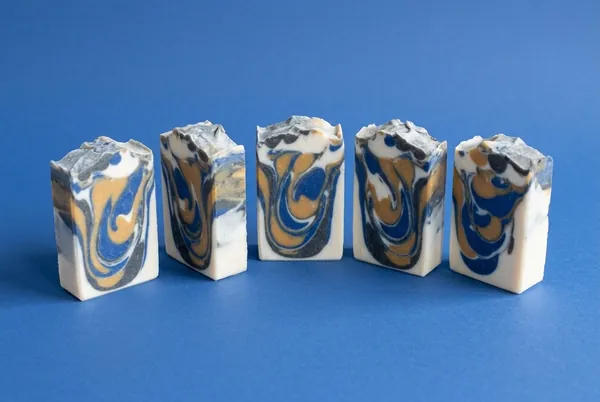
Swirl techniques: in the pot, drop, hanger, spoon and Taiwan
Seven cold-process swirls step by step, with the batter, recipe and temperatures that keep soap fluid, and why swirls turn muddy or lumpy.

Scenting soap: essential oils and fragrance oils
How much essential or fragrance oil to use in soap, what ounces per pound mean in percent, the IFRA limits for common essential oils, and EU allergen labelling.
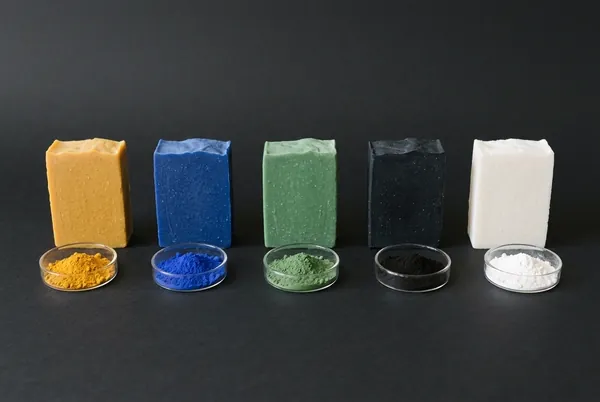
Colouring soap: micas, oxides, ultramarines and pigments
Which colourants survive cold-process soap, how much to use per 500 g of oils, how to disperse and split colour, and what the EU, UK and US rules ask.
Where these proportions come from
Our own palm-free formulation at a 5 % superfat, made slow-moving for a swirl: mostly liquid oils, little cocoa butter and a 30 % lye solution. The spearmint is held under IFRA's category 9 limit for carvone, which is why there is so little of it.