Unscented baby bar
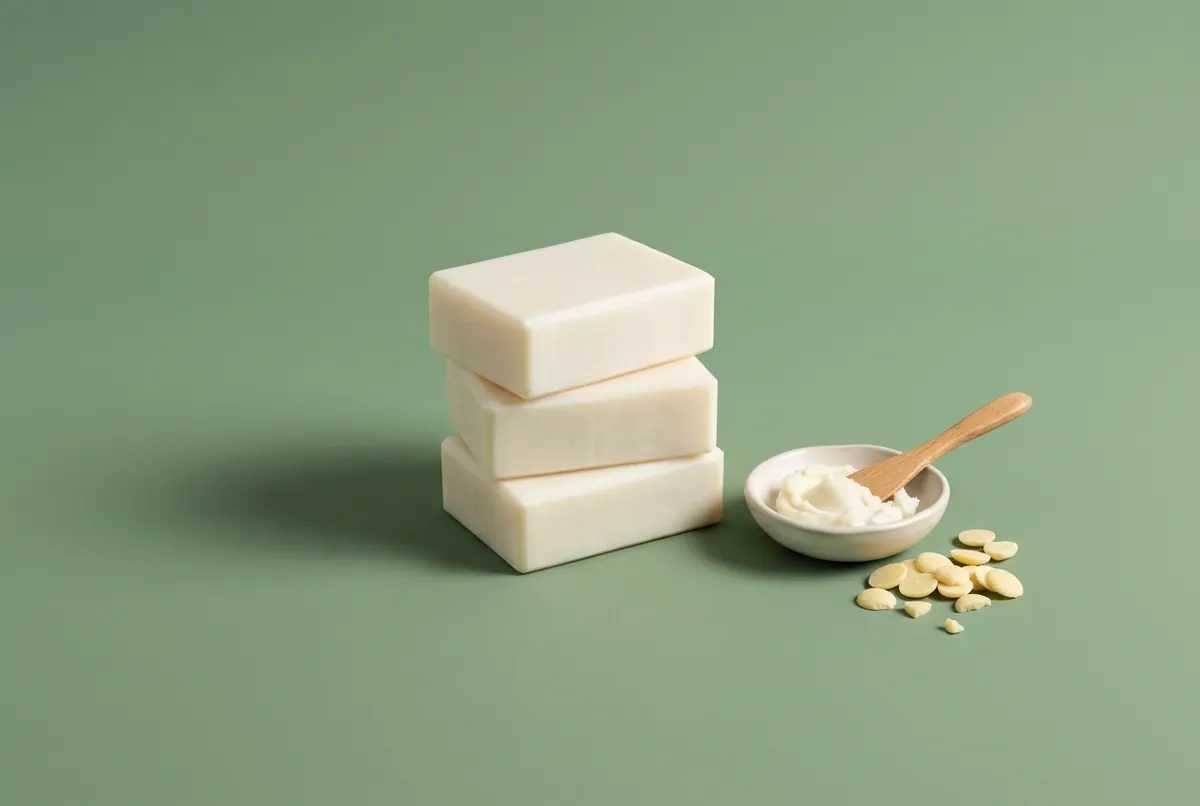
A very mild bar with nothing added: no scent and no colour, just olive oil with shea and cocoa butter for firmness and only 12 % coconut oil, so it cleans gently. A 7 % superfat leaves a little more oil in the bar.
- Skill
- Beginner
- Method
- Cold process
- Batch
- 1000 g of oils about 1394 g of batter
- Hands-on
- 1 hour
- Cure
- 6 weeks
- Gel phase
- Either way gel or not, both work
What you need
For 1000 g of oils, which fills a 1.5 litre loaf mould. Weigh everything, liquids included.
| Olive Oil · 55.0 % | 550 g | 19.40 oz |
| Shea Butter · 15.0 % | 150 g | 5.29 oz |
| Coconut Oil · 12.0 % | 120 g | 4.23 oz |
| Cocoa Butter · 10.0 % | 100 g | 3.53 oz |
| Castor Oil · 8.0 % | 80 g | 2.82 oz |
| Sodium hydroxide (NaOH) · the lye, 100 % pure | 130.2 g | 4.59 oz |
| Distilled water · for a 33 % lye solution | 264.3 g | 9.32 oz |
- Superfat
- 7 %
- Temperatures
- Oils and lye solution each between 35 and 43 °C (95 and 110 °F)
Method
-
Get ready
Put on splash goggles, nitrile gloves and long sleeves, open a window or turn on the extractor fan, and keep children and pets out of the room. Set the mould out level where it can stay for two days. -
Weigh the oils
Weigh 150 g shea butter, 100 g cocoa butter and 120 g coconut oil into the pot, and 550 g olive oil and 80 g castor oil into a jug. -
Make the lye solution
Weigh 264.3 g distilled water into a heat-safe jug and 130.2 g sodium hydroxide into a dry container. In a well-ventilated spot, pour the lye slowly into the water, never the water onto the lye, stir until clear and leave it to cool, labelled and out of reach. -
Melt the butters
Melt the shea butter, cocoa butter and coconut oil together on the lowest heat until clear, then pour in the olive and castor oils. -
Check the temperatures
Carry on when both the oils and the lye solution are between 35 and 43 °C (95 and 110 °F). Cooler than that, the butters start to set and thicken the batter before it has traced. -
Combine
Pour the lye solution into the oils down the shaft of the stick blender, tap the blender to let trapped air out, and keep the blade under the surface while it runs. -
Blend to light trace
Pulse for a few seconds, stir with the blender off, and repeat until the batter is opaque and a drizzle leaves a faint line on the surface. With this much olive oil it can take several minutes. -
Pour and cover
Pour into the mould, tap it on the worktop to raise air bubbles, and cover it with a lid or board and a folded towel for a day. -
Clean up
With your gloves still on, wipe the batter off the pot and tools with paper towels into the bin, then wash them in hot soapy water. -
Unmould and cut
After about 48 hours, when the loaf is firm, unmould it with gloves on and cut it into bars about 2.5 cm (1 in) thick. Bevel the edges with a vegetable peeler if you like, for a softer bar in small hands. -
Cure
Stand the bars on edge in a dry, airy room for six weeks, turning them every few days. A young, olive-rich bar is soft and slippery; it gets harder and milder as it dries.
Tips
- The word baby here describes the formulation, not a promise: no soap is tear-free, so keep it away from eyes and rinse well.
- Unrefined shea and cocoa butter leave a faint nutty, chocolate smell. For a whiter, almost odourless bar use deodorised cocoa butter and refined shea, and choose Refined Shea Butter in the calculator: it takes very slightly more lye.
- Shea butter comes from a tree nut. If anyone who will use the soap has a nut allergy, replace the shea in the calculator, which works out the new lye, rather than simply swapping one fat for another.
The oils
| Oil | Share |
|---|---|
| Olive Oil (virgin / refined / olive oil) | 55.0 % |
| Shea Butter | 15.0 % |
| Coconut Oil | 12.0 % |
| Cocoa Butter (Theobroma Oil) | 10.0 % |
| Castor Oil | 8.0 % |
How it is made
| Process | Cold process |
| Alkali | NaOH |
| Superfat | 7 % |
| Water | lye water at 33 % |
| Iodine value | 66 |
| INS | 130 |
Why make it
One of the mildest bars on the site, cleansing 8 and conditioning 66 on our scale, with a 7 % superfat and nothing added: no scent and no colour. That makes it a common choice for sensitive skin and for older babies and children. Northern Lincolnshire and Goole NHS Foundation Trust, for example, advises plain water with no soap for a newborn's first few weeks, and after that products free from alcohol, colour and perfume; this bar fits the second half of that advice, not the first. Dermatologists likewise recommend gentle, fragrance-free cleansers for dry skin (American Academy of Dermatology). No soap is tear-free, so keep it away from eyes, and remember that shea butter comes from a nut.
Sources
- Skincare for newborn babies · Northern Lincolnshire and Goole NHS Foundation Trust, 2022
- Dermatologists' top tips for relieving dry skin · American Academy of Dermatology
What tradition, makers' experience and research say about soaps like this, each labelled for what it is. It is not medical advice, and no soap treats a skin condition: if you have one, ask a doctor or pharmacist.
What the numbers say
- Lauric acid 5.9 %
- Myristic acid 2.3 %
- Palmitic acid 12.0 %
- Stearic acid 11.7 %
- Ricinoleic acid 7.1 %
- Oleic acid 49.7 %
- Linoleic acid 8.6 %
- Other 3.4 %
Saturated : unsaturated 34 : 66
Computed from the fatty acids of the fats above. The bands are what the craft has settled on, not chemistry — a bar outside one is not wrong.
From the guides
All guides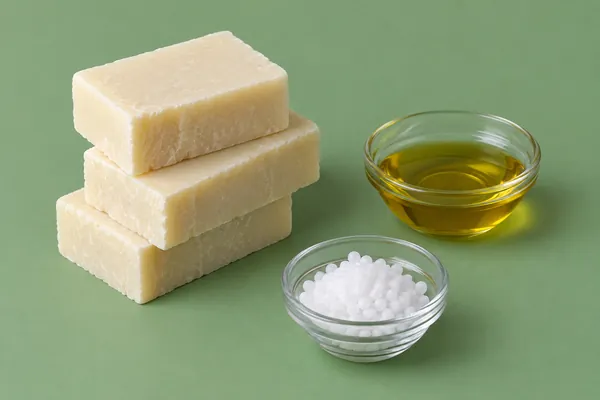
Superfat and lye discount: why recipes leave some oil unsaponified
What superfat and lye discount mean, how the calculator applies them, where makers set them for each soap, and why oil added at trace isn't the oil left over.
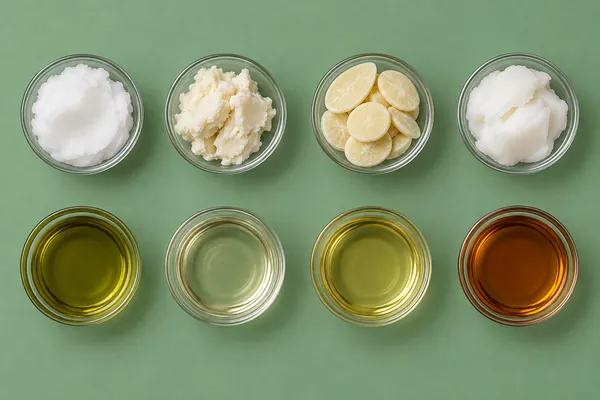
Fatty acids and soap qualities: what the numbers mean
The eight fatty acids behind how a bar behaves, how the five quality numbers are summed from them, where the usual ranges came from and when to ignore them.
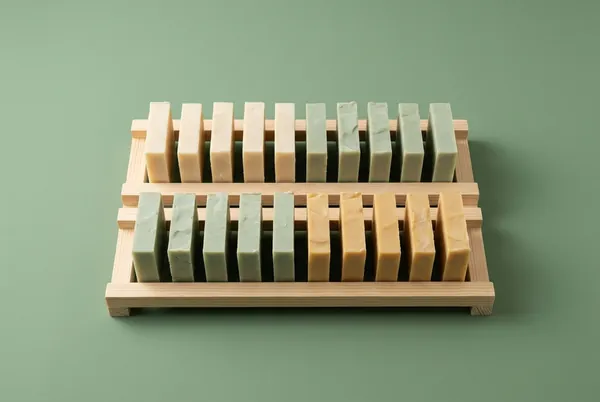
Curing and storing handmade soap
What curing does to cold process soap and what it doesn't, how long it takes, how to set bars up to cure, how to tell when they're done, and how to store them.
Guides with this recipe
Where these proportions come from
Adapted from Kelly Cable's gentle baby soap, keeping its five oils (olive, coconut, castor, cocoa butter and shea): coconut cut from about 22 % to 12 % and castor from about 14 % to 8 % for a milder, less sticky bar, shea raised to 15 % for firmness, and the superfat set at 7 %.
Formulation adapted from The Natural Soap Making Book for Beginners by Kelly Cable (Althea Press, 2017). The method and notes are ours.