Peppermint foot scrub bar
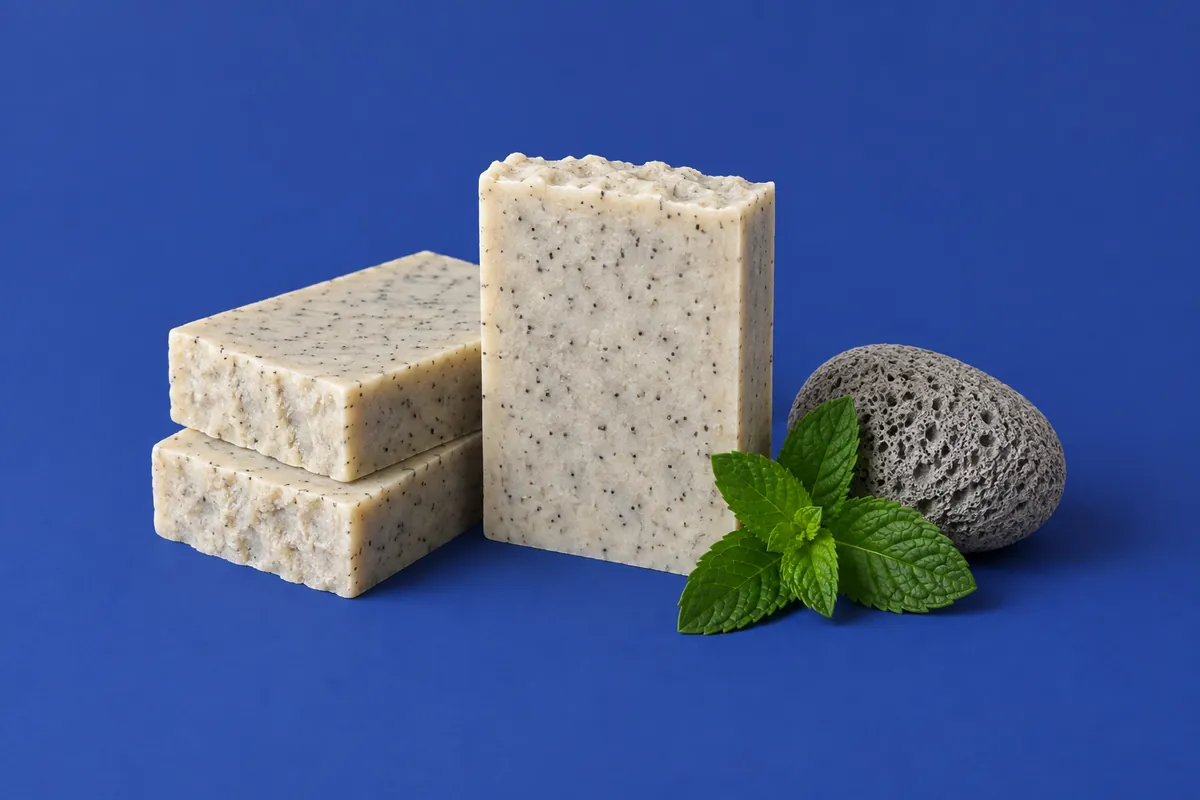
A hard, scrubby bar for feet, packed with fine pumice and scented with peppermint essential oil. The high coconut oil gives a fast, big lather, and a higher superfat keeps it from feeling harsh.
- Skill
- Beginner
- Method
- Cold process
- Batch
- 1000 g of oils about 1493 g of batter
- Hands-on
- 1 hour
- Cure
- 5 weeks
- Gel phase
- Either way gel or not, both work
What you need
For 1000 g of oils, which fills a 1.5 litre loaf mould. Weigh everything, liquids included.
| Coconut Oil · 40.0 % | 400 g | 14.11 oz |
| Olive Oil · 30.0 % | 300 g | 10.58 oz |
| Shea Butter · 15.0 % | 150 g | 5.29 oz |
| Cocoa Butter · 10.0 % | 100 g | 3.53 oz |
| Castor Oil · 5.0 % | 50 g | 1.76 oz |
| Sodium hydroxide (NaOH) · the lye, 100 % pure | 141.2 g | 4.98 oz |
| Distilled water · for a 33 % lye solution | 286.7 g | 10.11 oz |
| Pumice powder, fine · 4 tbsp, stirred into 2 tablespoons of the recipe's liquid oils first | 46 g | 1.61 oz |
| Peppermint essential oil · 2.0 % of the oils, at trace | 20 g | 0.71 oz |
- Superfat
- 8 %
- Temperatures
- Oils and lye solution each between 35 and 40 °C (95 and 104 °F)
Method
-
Get ready
Open a window or turn on the extractor fan, send children and pets out, and put on splash goggles, nitrile gloves and long sleeves. Set out a 1.5 litre loaf mould, and wear a dust mask while you measure the pumice. -
Weigh everything
Weigh 400 g coconut oil, 150 g shea butter and 100 g cocoa butter into the pot, and 300 g olive oil and 50 g castor oil into a jug. Weigh 286.7 g of distilled water into the lye jug, 20 g of peppermint essential oil into a small cup, and the 141.2 g of sodium hydroxide last, into a dry container. -
Make the lye solution
Where air moves, pour the sodium hydroxide slowly into the water, never the water onto the lye, and stir until it turns clear. Keep your face away from the vapour and leave it to cool, labelled and out of reach. -
Mix the pumice
Spoon 2 tablespoons of the liquid oils out of the jug into a small bowl and stir in 4 tablespoons of fine pumice to a smooth paste. -
Melt the fats
Melt the coconut oil, shea butter and cocoa butter on the lowest heat until just clear, then pour in the rest of the liquid oils from the jug. -
Check the temperatures
Go on when the oils are clear and both they and the lye solution are between 35 and 40 °C (95 and 104 °F). -
Blend to light trace
Pour the lye solution into the oils down the shaft of the stick blender, tap out the trapped air, and pulse and stir to light trace. Stir in the peppermint oil by hand. -
Thicken the batter
Keep pulsing until the batter reaches medium trace, like soft pudding, so that it can hold the pumice up instead of letting it sink. -
Add the pumice
Stir the pumice paste in by hand until it is spread evenly through the batter. -
Pour
Pour or spoon the batter into the mould, tap it firmly on the worktop to settle it and bring up air, and smooth the top. -
Cover and leave
Cover the mould with its lid or a board and lay a towel over it for a day. It may gel or not; either is fine. -
Unmould and cut
This coconut-rich loaf hardens fast, so unmould it with gloves on after about 24 hours and cut it straight away, before it turns brittle. Use an old knife: pumice blunts a blade. -
Cure
Stand the bars on edge in a dry, airy place for five weeks, turning them every few days.
Tips
- Pumice is for feet and hands, not for faces or other tender skin.
- The 40 % coconut oil makes a bar that cleans strongly; the 8 % superfat is there to balance it, so don't lower it.
- If the pumice settled at the bottom of the bars, the batter was too thin when it went in. Take it to a thicker trace next time.
- Keep peppermint soap away from the eyes, and don't use it on young children.
The oils
| Oil | Share |
|---|---|
| Coconut Oil | 40.0 % |
| Olive Oil (virgin / refined / olive oil) | 30.0 % |
| Shea Butter | 15.0 % |
| Cocoa Butter (Theobroma Oil) | 10.0 % |
| Castor Oil | 5.0 % |
How it is made
| Process | Cold process |
| Alkali | NaOH |
| Superfat | 8 % |
| Water | lye water at 33 % |
| Iodine value | 45 |
| INS | 171 |
Why make it
A tough bar for feet and hard-working hands. Forty per cent coconut oil gives a quick, big lather and strong cleansing, 27 on our scale, balanced by an 8 % superfat, and the butters make it hard enough, 50, to stand up to a wet shower floor. Fine pumice, powdered volcanic rock, does the scrubbing, much as a pumice stone does on rough heels. The American Academy of Dermatology notes that mechanical exfoliation can be too irritating for dry or sensitive skin, and pumice is coarser than most scrubs, so keep this bar off the face and other tender skin and use it gently. Peppermint gives a clean, bright smell that many people enjoy at the end of a long day on their feet; keep the lather away from the eyes, and don't use it on young children.
Sources
- How to safely exfoliate at home · American Academy of Dermatology
What tradition, makers' experience and research say about soaps like this, each labelled for what it is. It is not medical advice, and no soap treats a skin condition: if you have one, ask a doctor or pharmacist.
What the numbers say
- Lauric acid 19.7 %
- Myristic acid 7.6 %
- Palmitic acid 10.9 %
- Stearic acid 11.8 %
- Ricinoleic acid 4.4 %
- Oleic acid 34.5 %
- Linoleic acid 5.9 %
- Other 6.8 %
Saturated : unsaturated 55 : 45
Computed from the fatty acids of the fats above. The bands are what the craft has settled on, not chemistry — a bar outside one is not wrong.
From the guides
All guides
Soap additives: salt, sugar, sodium lactate, clays, oats, silk and more
What common soap additives do, how much to use and when they go in: sourced doses for sodium lactate, salt, sugar, honey, citric acid, clays, oats and silk.

Scenting soap: essential oils and fragrance oils
How much essential or fragrance oil to use in soap, what ounces per pound mean in percent, the IFRA limits for common essential oils, and EU allergen labelling.
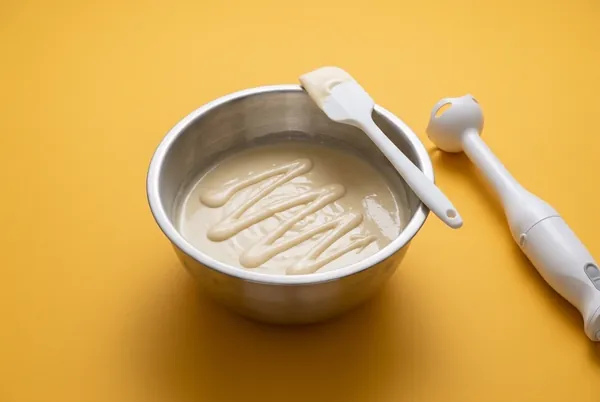
Trace: how to tell when soap batter is ready
What trace is, how to read emulsion, light, medium and thick trace, how to spot false trace, and what makes soap batter thicken faster or slower.
Where these proportions come from
Our own formulation: 40 % coconut oil for a hard bar with a quick, big lather, balanced by an 8 % superfat, with shea and cocoa butter for firmness, fine pumice for scrub and peppermint for scent.