Soy-free lard and sunflower bar
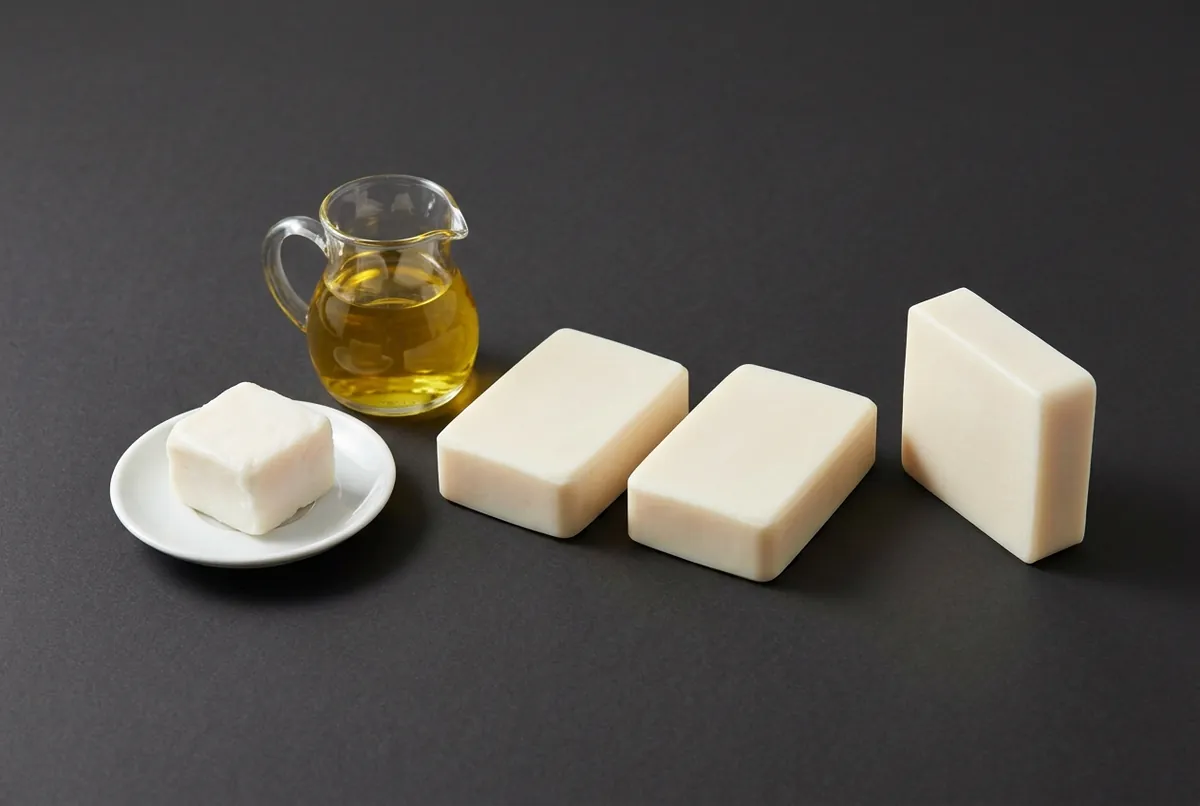
A cheap, hard and creamy bar of lard, coconut oil and high-oleic sunflower oil, with no soybean or canola oil in it. The sunflower oil keeps well, so it needs no antioxidant, and a teaspoon of salt helps the loaf firm up. Unscented.
- Skill
- Beginner
- Method
- Cold process
- Batch
- 1000 g of oils about 1436 g of batter
- Hands-on
- 1 hour
- Cure
- 6 weeks
- Gel phase
- Either way gel or not, both work
What you need
For 1000 g of oils, which fills a 1.5 litre loaf mould. Weigh everything, liquids included.
| Lard · 45.0 % | 450 g | 15.87 oz |
| Coconut Oil · 25.0 % | 250 g | 8.82 oz |
| Sunflowerseed Oil - High Oleic Acid · 30.0 % | 300 g | 10.58 oz |
| Sodium hydroxide (NaOH) · the lye, 100 % pure | 141.8 g | 5.00 oz |
| Distilled water · for a 33 % lye solution | 287.9 g | 10.16 oz |
| Fine salt · 1 tsp, dissolved in the water before the lye, for a firmer loaf | 6 g | 0.21 oz |
- Superfat
- 5 %
- Temperatures
- Oils and lye solution each between 35 and 43 °C (95 and 110 °F)
Method
-
Get ready
Put on splash goggles, nitrile gloves and long sleeves, open a window or turn on the extractor fan, and keep children and pets out of the room. Set out a 1.5 litre loaf mould, level, where it can stay for two days. -
Weigh the fats
Weigh 450 g lard and 250 g coconut oil into the pot, and 300 g high-oleic sunflower oil into a jug. -
Dissolve the salt
Weigh 287.9 g distilled water into a heat-safe lye jug and stir in 1 level teaspoon (6 g) of fine salt until it has dissolved completely. -
Make the lye solution
Weigh 141.8 g sodium hydroxide into a small, dry container. By an open window, pour it slowly into the salt water, never the water onto the lye, and stir until it runs clear, keeping your face away from the vapour. Leave it to cool, labelled and out of reach. -
Melt the fats
Melt the lard and coconut oil together on the lowest heat until clear, then pour in the sunflower oil. -
Check the temperatures
Go ahead when the oils and the lye solution are both between 35 and 43 °C (95 and 110 °F). Much cooler and the lard starts to set, which thickens the batter before it has really traced. -
Blend to light trace
Pour the lye solution into the oils down the shaft of the stick blender, then pulse for a few seconds and stir, over and over, until the batter is opaque and a drizzle leaves a faint line on the surface. -
Pour and cover
Pour into the mould, tap it firmly on the worktop to raise air bubbles, and cover it with a lid or board and a folded towel for a day. A warm loaf firms up sooner. -
Clean up with your gloves on
Wipe the raw batter off the pot and tools with paper towels into the bin, then wash everything in hot soapy water. -
Unmould and cut
After 24 to 48 hours, when the loaf is firm and has pulled away from the sides, unmould it with gloves on and cut it into bars about 2.5 cm (1 in) thick. It will be white and still a little soft, which is normal for lard. -
Cure for six weeks
Stand the bars on edge in a dry, airy place out of the sun, a finger's width apart, for six weeks, turning them every few days. Lard soap keeps hardening for weeks, and the full cure makes it last longer in use.
Tips
- Check that the bottle says high oleic. Ordinary sunflower oil is mostly linoleic acid, needs a little more lye and spots far more easily; if that is all you have, run it through the calculator first and expect the bars to keep less well.
- The salt is optional and does not change the lye. It helps the loaf firm up and leave the mould sooner; much more than this starts to cut the lather.
- Use fresh, white lard that smells of nothing. If it smells meaty or sour, the soap will too.
- Our budget bar uses canola oil with EDTA and rosemary extract to keep it, and our old-fashioned lard bar is simply lard and coconut oil.
The oils
| Oil | Share |
|---|---|
| Lard (pure rendered pork fat) | 45.0 % |
| Coconut Oil | 25.0 % |
| Sunflowerseed Oil - High Oleic Acid | 30.0 % |
How it is made
| Process | Cold process |
| Alkali | NaOH |
| Superfat | 5 % |
| Water | lye water at 33 % |
| Iodine value | 54 |
| INS | 155 |
Why make it
Our budget bar with high-oleic sunflower oil in place of the canola, for makers who would rather keep soy and rapeseed oils out of their soap. Lard and coconut oil make a hard, creamy bar with a steady lather, and the sunflower oil, mostly oleic acid like olive oil, keeps it mild: cleansing 18 and conditioning 55, a good all-round bar for hands and body. It also keeps better. Ordinary sunflower and soybean oils are more than half linoleic acid, which oxidises and can show as orange spots over a long cure, while the high-oleic kind carries far less (Codex), so this bar needs no antioxidant. Plain lard soap is the farmhouse bar of tradition, and it wants patience: lard bars start soft and keep hardening for weeks, so give it six weeks on the rack. The salt only helps the loaf firm up sooner.
Sources
- Standard for Named Vegetable Oils (CXS 210-1999) · Codex Alimentarius Commission (FAO/WHO)
- The Dreaded Orange Spot · Kevin M. Dunn, The Handcrafted Soapmaker (Handcrafted Soapmakers Guild), Winter 2005/2006, 2005
What tradition, makers' experience and research say about soaps like this, each labelled for what it is. It is not medical advice, and no soap treats a skin condition: if you have one, ask a doctor or pharmacist.
What the numbers say
- Lauric acid 12.3 %
- Myristic acid 5.5 %
- Palmitic acid 14.6 %
- Stearic acid 8.9 %
- Oleic acid 47.0 %
- Linoleic acid 6.9 %
- Other 7.0 %
Saturated : unsaturated 45 : 55
Computed from the fatty acids of the fats above. The bands are what the craft has settled on, not chemistry — a bar outside one is not wrong.
Try it differently
7 variationsThe same soap with one thing moved. Each opens in the calculator ready to change again.
- Safflowerseed Oil - High Oleic Acid instead of Sunflowerseed Oil - High Oleic Acid
- Rice Bran Oil instead of Sunflowerseed Oil - High Oleic Acid
- Olive-Pomace Oil (refined / blended) instead of Sunflowerseed Oil - High Oleic Acid
- 8 % superfat
- Safflowerseed Oil - High Oleic Acid instead of Sunflowerseed Oil - High Oleic Acid and 8 % superfat
- Rice Bran Oil instead of Sunflowerseed Oil - High Oleic Acid and 8 % superfat
- Olive-Pomace Oil (refined / blended) instead of Sunflowerseed Oil - High Oleic Acid and 8 % superfat
From the guides
All guides
Lard and tallow: soaping with animal fats
Why lard and tallow make hard, mild, creamy soap, how to render and store them at home, how beef, mutton and pork fat differ, and classic recipes.
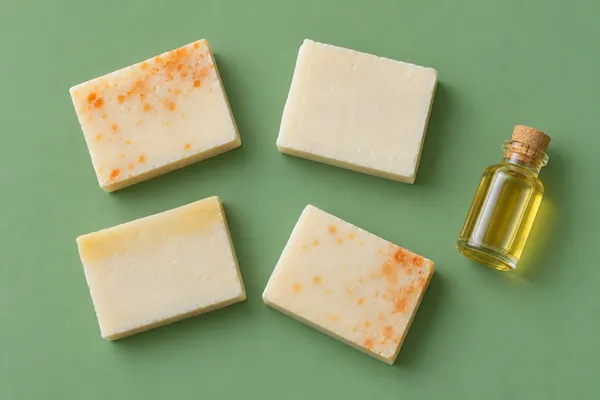
Dreaded orange spots (DOS) and rancid soap
What the orange spots on handmade soap are, why polyunsaturated oils, old fats and trace metals cause them, and which additives the tests show actually help.
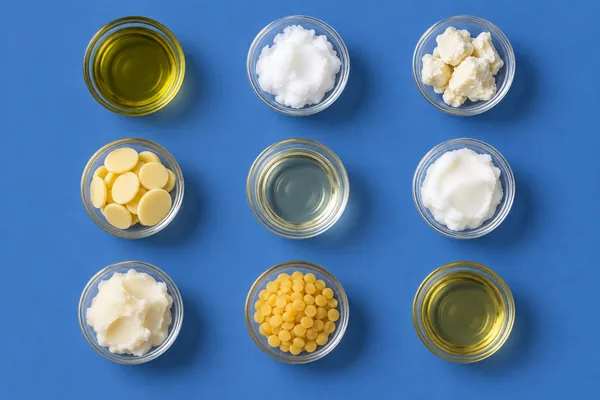
The soaping oils: what each one brings to a bar
Twenty-five soaping oils, butters and waxes: what each does in a bar and why, the share makers give it, and what to watch for, with figures from our records.
Where these proportions come from
Our own formulation: our budget bar with no soybean or canola oil, lard 45 %, coconut oil 25 % and high-oleic sunflower oil 30 %, which is mostly oleic acid and keeps well enough to need no antioxidant. A teaspoon of salt in the water, at the usual soapmaking dose, helps the loaf firm up.