Greek olive bar
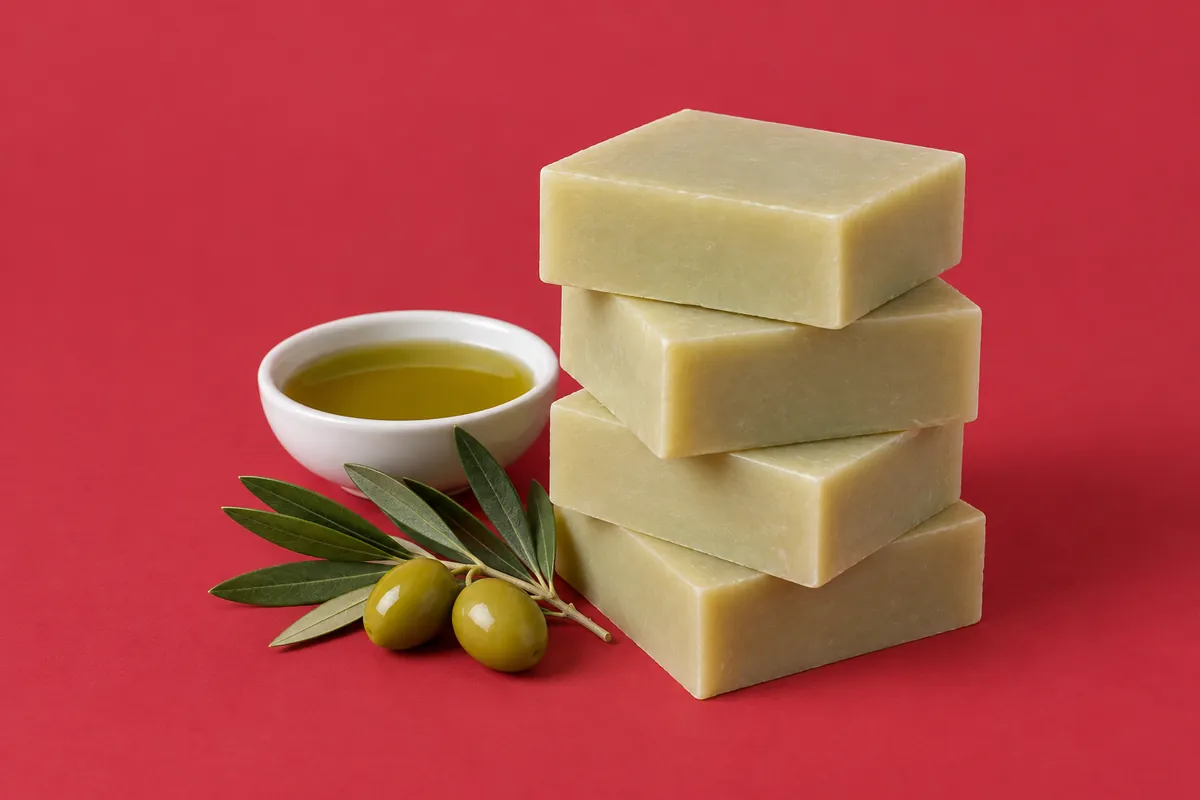
Nine parts olive oil to one of coconut: the mildest lathering bar you can make short of pure castile. Unscented and plain in the Greek way, with a pinch of rosemary extract to keep it fresh through a long cure.
- Skill
- Beginner
- Method
- Cold process
- Batch
- 1000 g of oils about 1404 g of batter
- Hands-on
- 1 hour
- Cure
- 12 weeks
- Gel phase
- Yes insulate the mould
What you need
For 1000 g of oils, which fills a 1.5 litre loaf mould. Weigh everything, liquids included.
| Olive Oil · 90.0 % | 900 g | 31.75 oz |
| Coconut Oil · 10.0 % | 100 g | 3.53 oz |
| Sodium hydroxide (NaOH) · the lye, 100 % pure | 133.2 g | 4.70 oz |
| Distilled water · for a 33 % lye solution | 270.4 g | 9.54 oz |
| Rosemary extract (ROE) · stirred into the oils, against orange spots during the long cure | 0.5 g | 0.02 oz |
- Superfat
- 5 %
- Temperatures
- Oils and lye solution each at 32 to 40 °C (90 to 104 °F)
Method
-
Get ready
Put on splash goggles, nitrile gloves and long sleeves, open a window or turn on the extractor fan, and keep children and pets out of the room. Line the loaf mould and set it on a level surface where it can stay for three days. -
Weigh everything
Weigh 100 g coconut oil into the soaping pot, 900 g olive oil into a jug and 0.5 g rosemary extract into a small dish. Weigh 270.4 g distilled water into a heat-safe jug and 133.2 g sodium hydroxide into a dry container. -
Make the lye solution
At the open window or under the fan, pour the sodium hydroxide slowly into the water, never the water onto the lye, and stir until clear. Leave it to cool, labelled and out of reach. -
Melt and combine the oils
Melt the coconut oil on low heat, then pour in the olive oil and stir in the rosemary extract. -
Check the temperatures
Go ahead when the oils and the lye solution are both between 32 and 40 °C (90 and 104 °F). Warm oil traces sooner, which helps a batter this rich in olive oil. -
Blend patiently to light trace
Pour the lye solution into the oils down the shaft of the stick blender and pulse for a few seconds at a time, stirring between bursts. High-olive batter stays thin for a long time, often ten minutes or more; keep going until a drizzle leaves a faint line on the surface before it sinks. -
Pour and insulate
Pour into the mould, tap it on the worktop to raise air bubbles, cover it with a board and wrap it in a towel for a day. The warmth takes it through gel, which makes a high-olive loaf firmer sooner and less prone to soda ash. -
Give it time in the mould
Leave the loaf in the mould for two to three days, until it is firm to a pressed finger and has pulled away slightly from the sides. -
Unmould and cut
Unmould it with gloves on and cut it into bars about 2.5 cm (1 in) thick. The cut faces may feel slippery at first, which is normal for olive soap. -
Clean up
With your gloves still on, wipe the batter off the pot and tools with paper towels into the bin, then wash them in hot soapy water. -
Cure for three months
Stand the bars on edge somewhere cool, dry and airy, with space around them, and turn them every week or so. They can be used from about eight weeks, but they are harder, milder and longer-lasting at three months and better still at six.
Tips
- This bar sits between two others: our castile brine bar is pure olive oil, and our high-olive bastile bar is three-quarters olive with castor for a creamier lather. This one is the plain Mediterranean middle, with just enough coconut to lather readily.
- The rosemary extract is 0.05 % of the oils, a small insurance against orange spots over a long cure. Leave it out if you cannot get it; nothing else changes.
- Any olive oil works. Extra virgin gives a greener bar and refined oil a paler one; pomace oil traces faster but takes slightly less lye, so choose it in the calculator if that is what you have.
- Keep a bar in use on a draining dish. Olive soap goes soft when it sits in water and firms up again as it dries.
The oils
| Oil | Share |
|---|---|
| Olive Oil (virgin / refined / olive oil) | 90.0 % |
| Coconut Oil | 10.0 % |
How it is made
| Process | Cold process |
| Alkali | NaOH |
| Superfat | 5 % |
| Water | lye water at 33 % |
| Iodine value | 77 |
| INS | 120 |
Why make it
Nine parts olive oil to one of coconut makes a very mild bar, cleansing 7 and conditioning 75 on our scale, with a little more lather than pure castile. It suits dry skin, children and anyone who washes their hands many times a day. Olive oil soap is an old Greek staple, made alongside the oil itself: on Lesvos the olive presses fed fourteen soap works by the end of Ottoman rule in 1912, and tradition around the Mediterranean uses such soap for body, hair and laundry alike. Its reputation for gentleness rests on that long use and on the formula's low cleansing, not on clinical trials. The catch is patience: the batter is slow to trace, the bars start soft and slippery, and they are at their best after three to six months on the rack.
Sources
- Museum of Industrial Olive-Oil Production of Lesvos · Piraeus Bank Group Cultural Foundation
What tradition, makers' experience and research say about soaps like this, each labelled for what it is. It is not medical advice, and no soap treats a skin condition: if you have one, ask a doctor or pharmacist.
What the numbers say
- Lauric acid 4.9 %
- Myristic acid 1.9 %
- Palmitic acid 13.3 %
- Stearic acid 2.8 %
- Oleic acid 62.9 %
- Linoleic acid 11.2 %
- Other 3.8 %
Saturated : unsaturated 24 : 76
Computed from the fatty acids of the fats above. The bands are what the craft has settled on, not chemistry — a bar outside one is not wrong.
Try it differently
5 variationsThe same soap with one thing moved. Each opens in the calculator ready to change again.
From the guides
All guides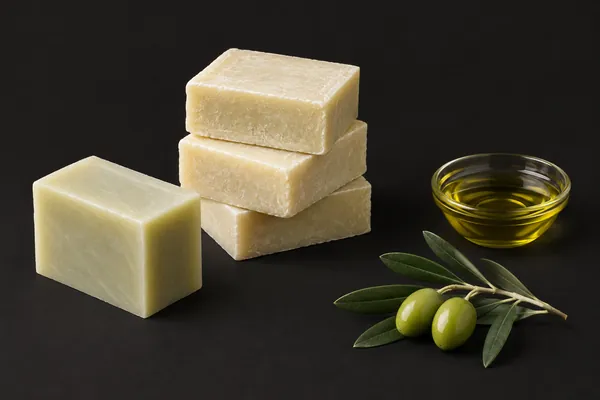
Castile soap: pure olive oil, and why it's worth the wait
What castile soap really is, why pure olive oil traces slowly and starts soft and slippery, how long to cure it, and a recipe with the calculator's numbers.
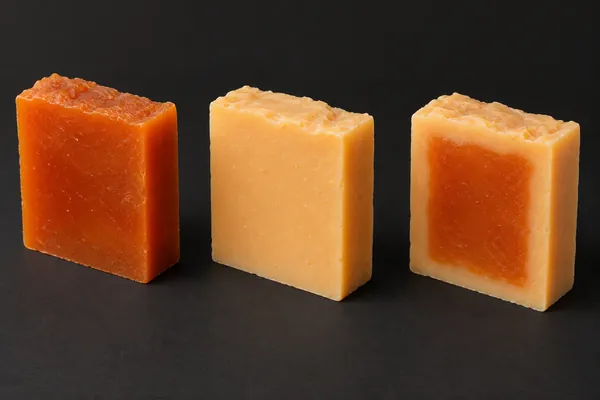
Gel phase: to insulate or keep it cool
What gel phase is, why a loaf turns dark and translucent, how gelled and ungelled bars differ, why partial gel is cosmetic, and how to cause or prevent it.
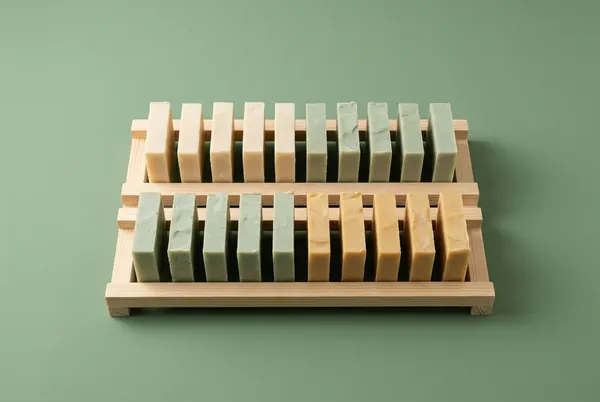
Curing and storing handmade soap
What curing does to cold process soap and what it doesn't, how long it takes, how to set bars up to cure, how to tell when they're done, and how to store them.
Where these proportions come from
Traditional Greek soap is olive oil soap, made where the oil was pressed: Lesvos alone had fourteen soap works by 1912. This bar keeps olive oil at nine-tenths and adds a tenth coconut oil, a common craft adjustment that gives a castile-like bar a quicker lather, at our usual 5 % superfat.