Nablus-style olive oil soap
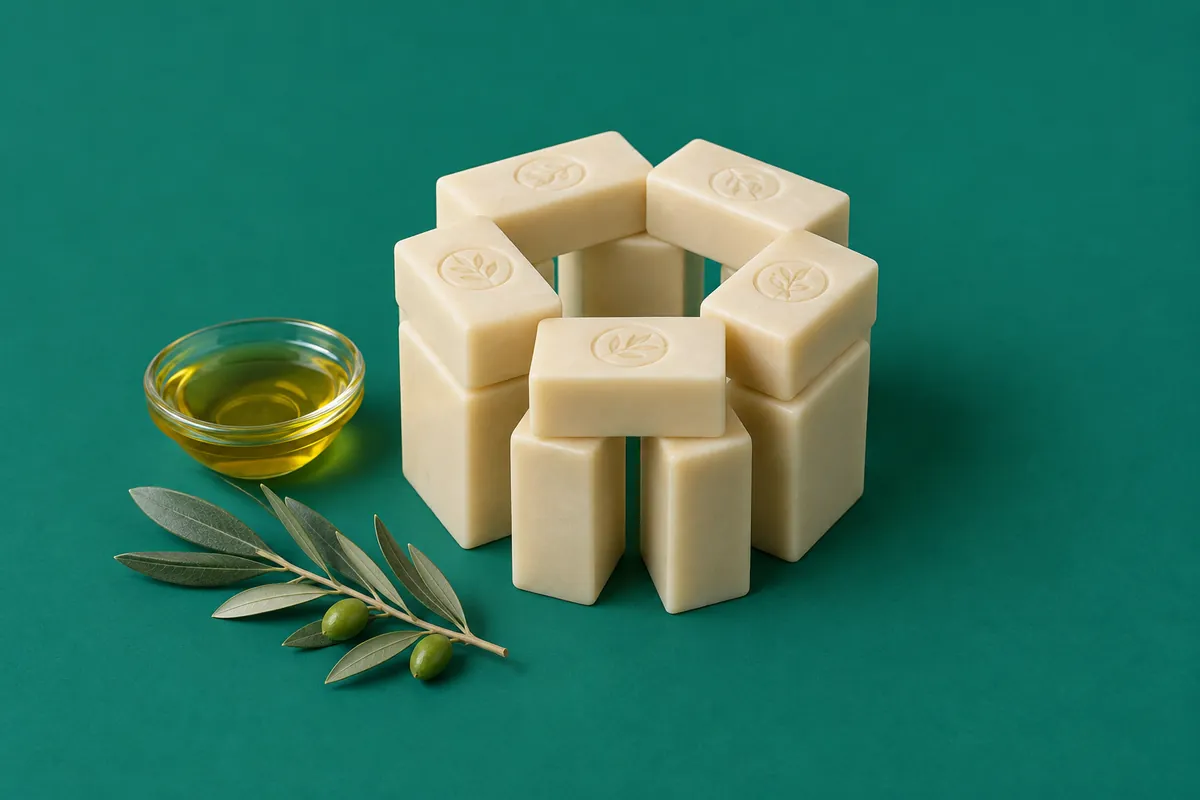
A cold-process homage to the olive oil soap of Nablus: olive oil, water and lye, and nothing else. Soaped cool so it stays pale, cut into stamped bars and stacked in a hollow ring to cure for six months or more, it makes an ivory, very mild, unscented bar.
- Skill
- Intermediate
- Method
- Cold process
- Batch
- 1000 g of oils about 1368 g of batter
- Hands-on
- 1 hour
- Cure
- 26 weeks
- Gel phase
- No keep it cool
What you need
For 1000 g of oils, which fills a 1.5 litre loaf mould. Weigh everything, liquids included.
| Olive Oil · 100.0 % | 1000 g | 35.27 oz |
| Sodium hydroxide (NaOH) · the lye, 100 % pure | 128.7 g | 4.54 oz |
| Distilled water · for a 35 % lye solution | 239.0 g | 8.43 oz |
- Superfat
- 5 %
- Temperatures
- Olive oil and lye solution both at 30 to 35 °C (86 to 95 °F), and the loaf left uncovered in a cool room
Method
-
Get ready
Put on splash goggles, nitrile gloves and long sleeves, open a window or turn on the extractor fan, and keep children and pets out of the room. Line a 1.5 litre loaf mould and set it level in a cool room where it can stay for three or four days. -
Weigh everything
Weigh 1000 g olive oil into the soaping pot, 239.0 g distilled water into a heat-safe jug and 128.7 g sodium hydroxide into a dry container. That is a little less water than in our castile, which helps this cool, ungelled soap set. -
Make the lye solution
At the open window or under the fan, pour the sodium hydroxide slowly into the water, never the water onto the lye, and stir until it runs clear, keeping your face away from the vapour. Leave it to cool to 30 to 35 °C (86 to 95 °F), labelled and out of reach; standing the jug in cold water speeds this up. -
Bring the oil to temperature
Bring the olive oil to 30 to 35 °C (86 to 95 °F), warming it only if the room is cold. Soaping this cool keeps the loaf from heating into gel, so the bars stay pale and opaque. -
Combine
Pour the lye solution into the oil down the shaft of the stick blender, tap the blender on the bottom of the pot to let out trapped air, and keep the blade under the surface while it runs. -
Blend patiently to light trace
Pulse and stir, over and over; a cool olive batter can take fifteen minutes or more. Keep going past the smooth, even stage until a drizzle leaves a faint trail on the surface before it sinks. -
Pour and leave it uncovered
Pour into the mould, tap it on the worktop to bring up air bubbles and smooth the top. Lay cling film on the surface to keep air off it and prevent soda ash, but add no lid or towel: the loaf should stay cool. -
Give it three days in the mould
Ungelled olive soap firms slowly. Leave it for three days, and longer if it still dents under a gloved finger. -
Unmould and cut
Unmould with gloves on and cut the loaf into bars about 3 cm (1.25 in) thick, about ten in all. -
Stamp the bars
Within a day of cutting, set your own stamp squarely on the top of each bar and give it a firm tap with a rubber mallet, about 1 mm (1/16 in) deep, as Nablus families press their seal into every bar. -
Clean up with your gloves on
Wipe the raw batter off the pot and tools with paper towels, put them in the bin, then wash everything in hot soapy water. -
Stack them in a hollow ring
Stand the bars on edge in a ring with a finger's width between them, then lay the next ring across the gaps of the one below, leaving the middle hollow like a chimney. Nablus soap dried in tall stacks of this kind; the point is air on every face, so a rack does as well if you turn the bars now and then. -
Cure for six months or more
Leave them somewhere cool, dry and dark for at least six months, and a year if you can wait, weighing one bar each month: while it is still losing weight, it is still curing. -
Wrap the cured bars
Once the weight holds steady, wrap each bar in plain paper and keep them in a dry cupboard, as Nablus makers pack theirs before storing them.
Tips
- This is the same formula as our castile apart from the water; what made Nablus soap famous was its process, not its oil. Here the soap is kept cool and pale, where the castile recipe is gelled in a warm, covered loaf.
- For the ivory colour of a Nablus bar, use refined olive oil, sold simply as olive oil or as light olive oil, which makes a paler soap than extra virgin. The calculator treats them as the same oil, so the lye does not change.
- If the loaf gels anyway in a warm room, a darker, slightly translucent patch shows in the middle. The soap is just as good, only two-toned; next time soap a little cooler or put the mould somewhere colder.
- The calculator scores it hardness 17 and cleansing 0, like any pure olive soap. The numbers cannot see a cure: after six months it is a hard, long-lasting bar.
The oils
| Oil | Share |
|---|---|
| Olive Oil (virgin / refined / olive oil) | 100.0 % |
How it is made
| Process | Cold process |
| Alkali | NaOH |
| Superfat | 5 % |
| Water | lye water at 35 % |
| Iodine value | 85 |
| INS | 106 |
Why make it
Nablus soap is olive oil, water and lye and nothing else, so on our scale it reads like castile: cleansing 0, conditioning 82 and a low, creamy lather. That suits anyone after a plain, unscented, very mild bar for hands and body. What made the Palestinian soap famous was its process: boiled for days, poured onto the soap-works floor, cut, stamped with the family's seal and dried for months to a year in tall, hollow stacks. This cold-process bar is a homage to it rather than a copy. Families in Nablus give the soap at weddings and to visitors, and its name for mildness rests on centuries of use, not on trials. Like any soap it is alkaline, and it needs six months or more on the rack.
Sources
- Tradition of Nabulsi soap making in Palestine (decision 19.COM 7.B.8) · UNESCO Intangible Cultural Heritage, 2024
- Rediscovering Palestine: Merchants and Peasants in Jabal Nablus, 1700-1900 · Beshara Doumani, University of California Press, 1995
- Palestine under the Moslems · Guy Le Strange, Palestine Exploration Fund, 1890
What tradition, makers' experience and research say about soaps like this, each labelled for what it is. It is not medical advice, and no soap treats a skin condition: if you have one, ask a doctor or pharmacist.
What the numbers say
- Palmitic acid 13.8 %
- Stearic acid 2.8 %
- Oleic acid 69.0 %
- Linoleic acid 12.3 %
- Other 2.6 %
Saturated : unsaturated 17 : 83
Computed from the fatty acids of the fats above. The bands are what the craft has settled on, not chemistry — a bar outside one is not wrong.
From the guides
All guides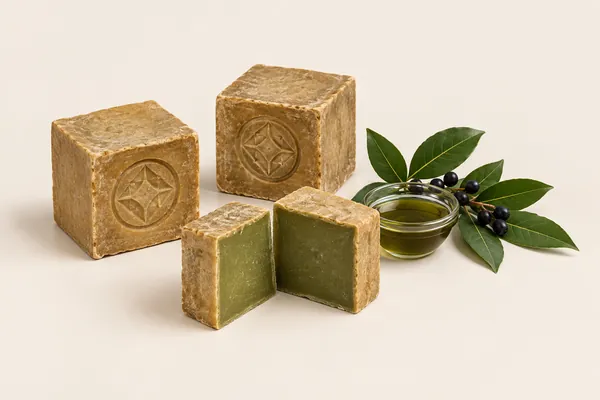
Aleppo soap and laurel berry oil
What Aleppo soap is, how the cauldron process differs from cold process at home, what laurel berry oil brings and why its SAP sits low, with recipes.
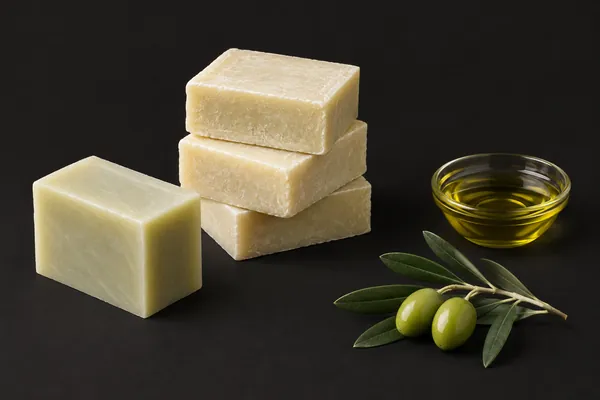
Castile soap: pure olive oil, and why it's worth the wait
What castile soap really is, why pure olive oil traces slowly and starts soft and slippery, how long to cure it, and a recipe with the calculator's numbers.
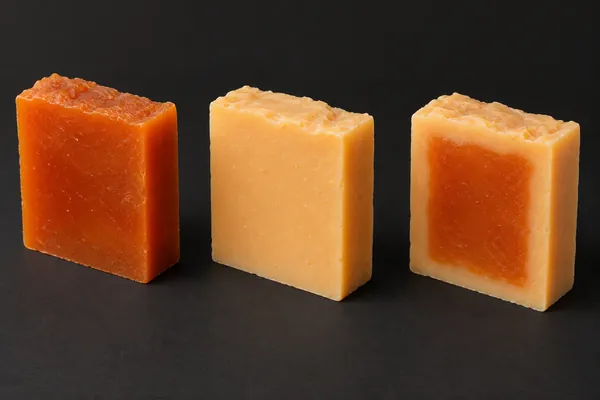
Gel phase: to insulate or keep it cool
What gel phase is, why a loaf turns dark and translucent, how gelled and ungelled bars differ, why partial gel is cosmetic, and how to cause or prevent it.
Where these proportions come from
Palestinian olive soap: olive oil, water and an alkali, historically qilw, the ash of barilla plants, with lime, and industrial caustic soda from the 1860s. It is single-oil, like castile; the difference is process, a soap boiled for days and dried for months, not formulation, and this cold-process bar is a homage to it. The superfat is 5 %: at 2 %, olive oil's published saponification range could leave a cold-process bar 1.2 % lye-heavy. Written at a 35 % lye solution, a little stronger than our castile's, which helps a cool, ungelled loaf set. The method is ours.