Savon de Marseille, 72 %
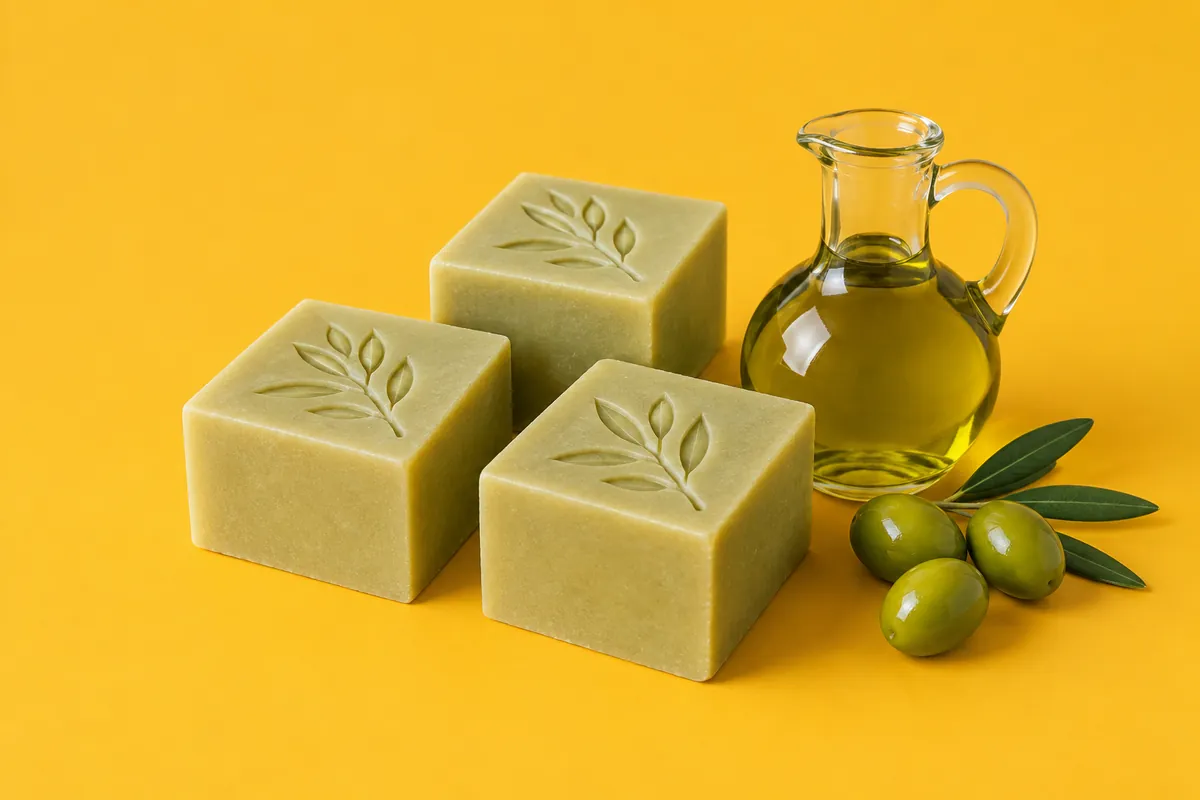
A cold-process homage to the olive oil soap of Marseille: 72 % olive oil, with coconut and palm for a harder bar and more lather than castile. Unscented and cut into chunky blocks, stamped if you like, it makes a hard, mild, long-lasting soap for hands and body.
- Skill
- Beginner
- Method
- Cold process
- Batch
- 1000 g of oils about 1412 g of batter
- Hands-on
- 1 hour
- Cure
- 12 weeks
- Gel phase
- Yes insulate the mould
What you need
For 1000 g of oils, which fills a 1.5 litre loaf mould. Weigh everything, liquids included.
| Olive Oil · 72.0 % | 720 g | 25.40 oz |
| Coconut Oil · 14.0 % | 140 g | 4.94 oz |
| Palm Oil · 14.0 % | 140 g | 4.94 oz |
| Sodium hydroxide (NaOH) · the lye, 100 % pure | 135.9 g | 4.79 oz |
| Distilled water · for a 33 % lye solution | 275.9 g | 9.73 oz |
- Superfat
- 5 %
- Temperatures
- Oils and lye solution each between 35 and 43 °C (95 and 110 °F)
Method
-
Get ready
Put on splash goggles, nitrile gloves and long sleeves, open a window or turn on the extractor fan, and keep children and pets out of the room. Line a 1.5 litre loaf mould and have a towel and every tool out before you open the lye. -
Melt and stir the palm oil
Melt the whole tub of palm oil and stir it well before you weigh any. It separates as it stands, and a scoop from the top is softer than one from the bottom. -
Weigh the oils
Weigh 140 g palm oil and 140 g coconut oil into the pot, and 720 g olive oil into a jug. -
Make the lye solution
Weigh 275.9 g distilled water into a heat-safe jug and 135.9 g sodium hydroxide into a dry container. At the open window, pour the lye slowly into the water, never the water onto the lye, stir until clear and leave it to cool, labelled and out of reach. -
Melt the hard oils
Melt the palm and coconut oils together on low heat until clear, then pour in the olive oil. -
Check the temperatures
Carry on when the oils are clear and both they and the lye solution are between 35 and 43 °C (95 and 110 °F). Any cooler and the palm starts to set, which thickens the batter before it has really traced. -
Combine
Pour the lye solution into the oils down the shaft of the stick blender, tap the blender on the bottom of the pot to let out trapped air, and keep the blade under the surface while it runs. -
Blend to light trace
Pulse for a few seconds, stir, and repeat. The palm and coconut bring trace on well before a pure olive batter would, often within three or four minutes: stop when a drizzle leaves a faint line on the surface. -
Pour and insulate
Pour into the mould, tap it on the worktop to bring up air bubbles and smooth the top. Cover it with a lid or board and wrap it in a towel for a day, so the loaf gels evenly and firms up sooner. -
Unmould
After 24 to 48 hours, when the loaf is firm and has cooled, unmould it with gloves on. -
Cut chunky blocks
Cut the loaf into blocks about 4 cm (1.5 in) thick, in the spirit of the Marseille cube, which gives about six. For bars that are ready sooner, cut them 2.5 cm (1 in) thick instead. -
Stamp them while they are soft
Within a day of cutting, set a soap stamp squarely on one face of each block and give it one or two firm taps with a rubber mallet, about 1 mm (1/16 in) deep. Use your own mark or a simple motif rather than the number: see the tips. -
Clean up with your gloves on
Wipe the raw batter off the pot and tools with paper towels, put them in the bin, then wash everything in hot soapy water. -
Cure for twelve weeks
Stand the blocks with air all round in a cool, airy room and turn them every week. Blocks this thick need twelve weeks at least, bars 2.5 cm thick about eight, and both keep hardening for months.
Tips
- On a real Marseille cube, "72 %" is a claim about the finished bar: 72 % oils and 28 % moisture, in the makers' own words. It says nothing about the recipe, and a home bar is not tested for it, so stamp yours with your own mark.
- Buy palm oil certified by the Roundtable on Sustainable Palm Oil (RSPO). To leave it out, more olive oil or shea butter can take its place, but each takes a different amount of lye: make the swap in the calculator and weigh its figures.
- For a salted, all-olive cube stamped in the same style, see our castile brine bar.
- A cured block, finely grated and dissolved in warm water, washes woollens and delicates by hand, the job Marseille soap is best known for in French homes. Rinse well: the superfat that keeps it mild on skin leaves a little oil in the water.
The oils
| Oil | Share |
|---|---|
| Olive Oil (virgin / refined / olive oil) | 72.0 % |
| Coconut Oil | 14.0 % |
| Palm Oil | 14.0 % |
How it is made
| Process | Cold process |
| Alkali | NaOH |
| Superfat | 5 % |
| Water | lye water at 33 % |
| Iodine value | 69 |
| INS | 131 |
Why make it
This is a homage to Marseille soap, not the soap itself. The real thing is cooked in a cauldron, washed with salt water and dried, and the "72 %" stamped on it is the share of oils in the finished bar, not a recipe. Our cold-process reading keeps olive oil in the lead and adds coconut and palm for a firmer bar with more lather than castile: hardness 30, cleansing 10 and conditioning 67 on our scale. That makes a hard, mild, unscented bar for hands and body that lasts well and is ready sooner than an all-olive soap. In France Marseille soap is known as an all-purpose soap, and its makers still sell a green olive soap for the body and a white one for the laundry. Its reputation rests on centuries of use rather than on trials.
Sources
- FAQ: savon de Marseille · Marius Fabre (manufacturer)
- Savon de Marseille: application for a geographical indication, IG 15-003 · Institut national de la propriété industrielle (INPI)
- The Handbook of Soap Manufacture · W. H. Simmons and H. A. Appleton, Scott, Greenwood & Son, 1908
What tradition, makers' experience and research say about soaps like this, each labelled for what it is. It is not medical advice, and no soap treats a skin condition: if you have one, ask a doctor or pharmacist.
What the numbers say
- Lauric acid 6.9 %
- Myristic acid 2.8 %
- Palmitic acid 17.2 %
- Stearic acid 3.1 %
- Oleic acid 56.3 %
- Linoleic acid 10.5 %
- Other 4.0 %
Saturated : unsaturated 32 : 68
Computed from the fatty acids of the fats above. The bands are what the craft has settled on, not chemistry — a bar outside one is not wrong.
Try it differently
6 variationsThe same soap with one thing moved. Each opens in the calculator ready to change again.
From the guides
All guides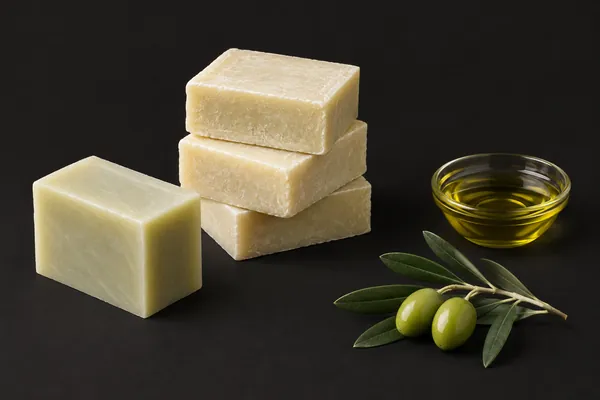
Castile soap: pure olive oil, and why it's worth the wait
What castile soap really is, why pure olive oil traces slowly and starts soft and slippery, how long to cure it, and a recipe with the calculator's numbers.
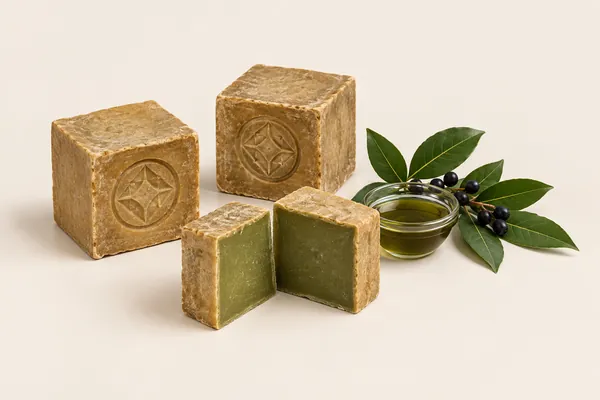
Aleppo soap and laurel berry oil
What Aleppo soap is, how the cauldron process differs from cold process at home, what laurel berry oil brings and why its SAP sits low, with recipes.
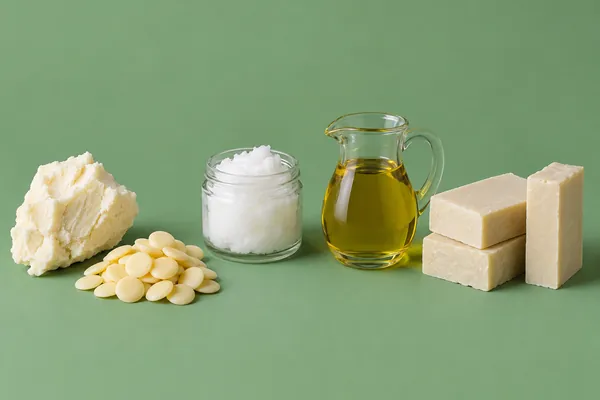
Palm-free soap: what takes palm oil's place
What palm oil does in a bar of soap, why makers drop it, and how lard, tallow, shea, cocoa, kokum or stearic acid take its place, with worked palm-free recipes.
Guides with this recipe
Where these proportions come from
The stamped "72 %" is the fatty-matter content of the finished bar, 72 % oils and 28 % moisture in the makers' own words, not an oil proportion. The composition here, 72 % olive oil with coconut and palm, is the common modern cold-process reading of it: one Marseille maker, Marius Fabre, makes its green soap of olive and copra (coconut) oil, and in 1908 Simmons and Appleton found groundnut oil in Marseille's white soaps. The superfat is 5 %: at 3 %, the three oils' published saponification ranges could leave a cold-process bar 0.4 % lye-heavy. The traditional soap is boiled in a cauldron, salted out and dried; this bar is a homage to it, and the method is ours.