Oatmeal, milk and honey bar
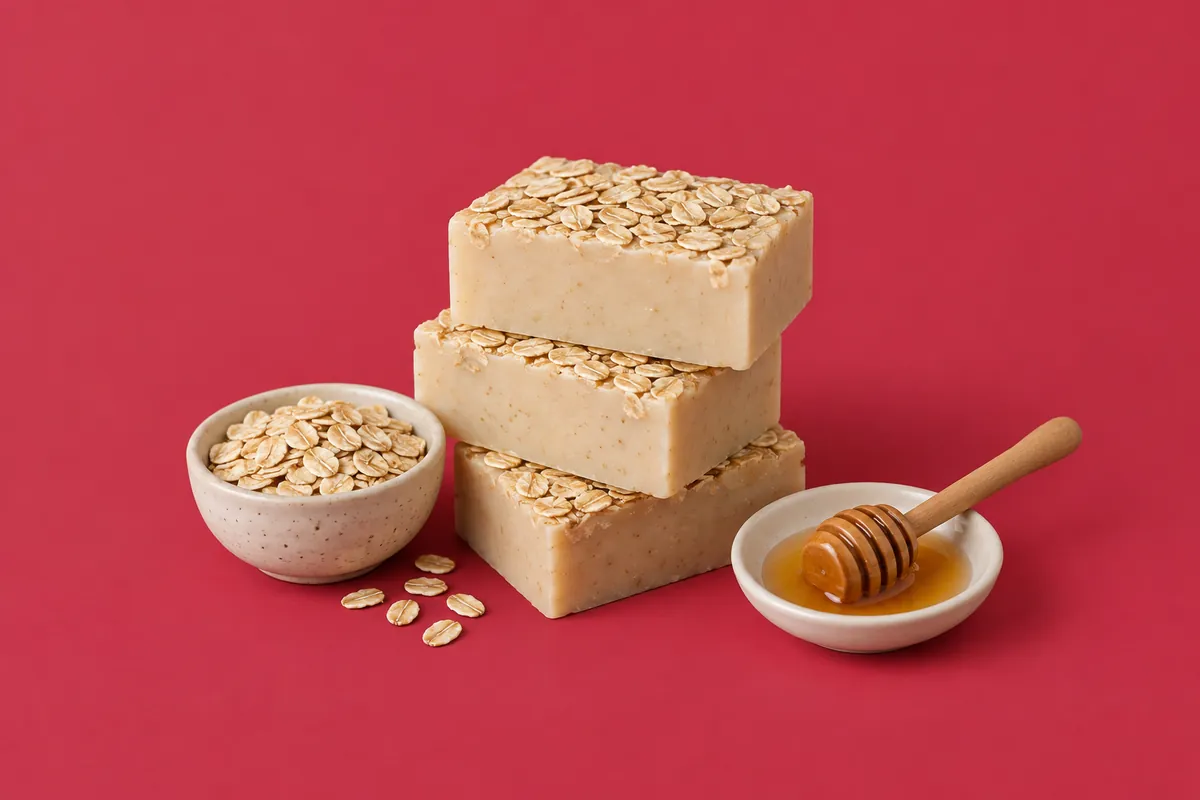
Frozen whole milk, colloidal oatmeal and honey in an olive, coconut and palm bar, finished with rolled oats pressed into the top. The batch is kept cool from start to finish, so the milk and honey stay pale.
- Skill
- Intermediate
- Method
- Cold process
- Batch
- 1000 g of oils about 1511 g of batter
- Hands-on
- 1 h 5 min
- Cure
- 6 weeks
- Gel phase
- No keep it cool
What you need
For 1000 g of oils, which fills a 1.6 litre loaf mould. Weigh everything, liquids included.
| Olive Oil · 40.0 % | 400 g | 14.11 oz |
| Coconut Oil · 25.0 % | 250 g | 8.82 oz |
| Palm Oil · 25.0 % | 250 g | 8.82 oz |
| Jojoba Oil · 5.0 % | 50 g | 1.76 oz |
| Castor Oil · 5.0 % | 50 g | 1.76 oz |
| Sodium hydroxide (NaOH) · the lye, 100 % pure | 137.9 g | 4.86 oz |
| Whole milk, frozen in cubes · all of the liquid; the lye goes onto it | 311 g | 10.97 oz |
| Honey · 1.5 tbsp, warmed and stirred into 1 tbsp of the oils | 32 g | 1.11 oz |
| Colloidal oatmeal · 3 tbsp, stirred into 2 tbsp of the oils first | 18.2 g | 0.64 oz |
| Rolled oats · 2 tbsp, whole, scattered over the poured soap | 11.5 g | 0.41 oz |
- Superfat
- 5 %
- Temperatures
- Keep the milk and lye below 30 °C (86 °F) and soap at 30 to 32 °C (86 to 90 °F)
Method
-
Freeze the milk
The day before, weigh the whole milk into an ice-cube tray and freeze it solid. -
Get ready
Put on goggles, gloves and long sleeves, work where the air moves, weigh everything, line the mould, clear a shelf in the fridge, and fill a bowl with ice and water for the lye jug to stand in. Melt and stir the whole tub of palm oil before you weigh it, since its harder part settles. -
Melt the oils
Melt the palm and coconut oils gently, stir in the olive, jojoba and castor oils, and let them cool to 30 to 32 °C (86 to 90 °F). -
Loosen the honey and oats
Warm the honey until it runs and stir it into 1 tablespoon of the melted oils. In a second cup, stir the colloidal oatmeal into 2 tablespoons of the oils until no dry lumps are left. -
Add the lye to the milk
Stand the jug of frozen milk in the iced water and sprinkle the 137.9 g of sodium hydroxide onto the milk a spoonful at a time, never the milk onto the lye, stirring until each dissolves. Over 10 to 15 minutes it should become a pale yellow slush and stay below 30 °C (86 °F). -
Strain and blend
Pour the milk and lye through a sieve into the oils and stick blend in short bursts, stirring between them, to light trace. -
Add the honey and oats
Stir in the honey and the oatmeal mixture, then blend for a few seconds until they disappear into the batter, which thickens quickly from here. -
Pour
Pour into the mould at a medium trace, like thick custard, and tap it on the bench to release air. -
Scatter the oats
Sprinkle the rolled oats over the surface and press them in lightly with the back of a spoon. -
Chill
Put the mould uncovered in the fridge for 24 hours; milk and honey both brown if the loaf heats into gel. -
Unmould and cut
Let the loaf come back to room temperature, then unmould it when firm, usually 24 to 48 hours after pouring. Lay it on its side to cut, so the knife does not drag oats across the bars. -
Cure
Stand the bars on a rack with air around them for six weeks, turning them now and then.
Tips
- Letcavage and Harden warn that more than about 2 teaspoons of honey per pound of oils can weep out of the finished bars. The 1.5 tablespoons here is right at that rate for 1000 g of oils, so resist adding more.
- Colloidal oatmeal disappears into the bar and leaves only a soft, faintly speckled cut face; the rolled oats on top stay pale and a little chewy. Brush off any loose ones after cutting.
- For a palm-free bar, use lard or shea butter in place of the palm oil and run the recipe through the calculator again, since the lye and the milk change.
The oils
| Oil | Share |
|---|---|
| Olive Oil (virgin / refined / olive oil) | 40.0 % |
| Coconut Oil | 25.0 % |
| Palm Oil | 25.0 % |
| Jojoba Oil | 5.0 % |
| Castor Oil | 5.0 % |
How it is made
| Process | Cold process |
| Alkali | NaOH |
| Superfat | 5 % |
| Water | lye water at 33 % |
| Iodine value | 58 |
| INS | 146 |
Why make it
Oatmeal, milk and honey is one of the best-loved handmade soaps, and makers often choose it, unscented, for dry skin or for anyone who dislikes fragrance. The formula is mild, cleansing 17 on our scale, and the milk's fat and sugars and the honey's sugars help give a creamy lather. Colloidal oatmeal is a recognised skin protectant in US leave-on products, but the FDA found no data to support that use in cleansers (FDA, 2003): in soap the contact is brief and rinsed away, so enjoy it as a gentle, familiar ingredient and expect nothing more of it. Oats can occasionally sensitise skin (Cosmetic Ingredient Review), so name them on the label. The palm oil makes a hard bar; choose RSPO-certified palm, or see the tips for a palm-free swap. Kept cool, the bar stays pale.
Sources
- Skin Protectant Drug Products for Over-the-Counter Human Use; Final Monograph (68 FR 33362), comment 15 · US Food and Drug Administration, 2003
- Safety Assessment of Avena sativa (Oat)-Derived Ingredients as Used in Cosmetics · Cosmetic Ingredient Review, 2014
What tradition, makers' experience and research say about soaps like this, each labelled for what it is. It is not medical advice, and no soap treats a skin condition: if you have one, ask a doctor or pharmacist.
What the numbers say
- Lauric acid 12.4 %
- Myristic acid 5.0 %
- Palmitic acid 18.7 %
- Stearic acid 3.2 %
- Ricinoleic acid 4.4 %
- Oleic acid 40.2 %
- Linoleic acid 8.3 %
- Other 9.2 %
Saturated : unsaturated 42 : 58
Computed from the fatty acids of the fats above. The bands are what the craft has settled on, not chemistry — a bar outside one is not wrong.
From the guides
All guides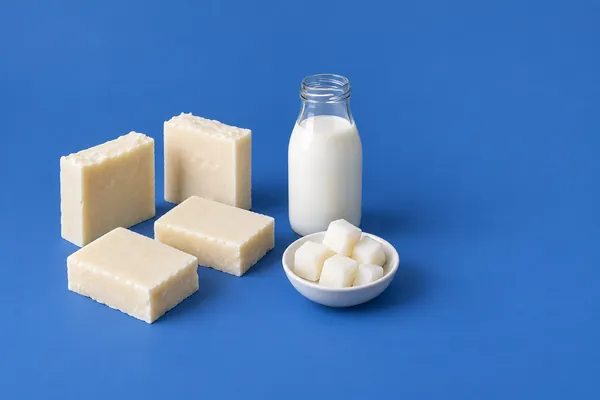
Milk soap: goat milk, freezing and keeping it pale
How to make goat milk soap without scorching it: frozen milk, lye added a spoonful at a time, a cool mould, and a full recipe worked through the calculator.

Soap additives: salt, sugar, sodium lactate, clays, oats, silk and more
What common soap additives do, how much to use and when they go in: sourced doses for sodium lactate, salt, sugar, honey, citric acid, clays, oats and silk.
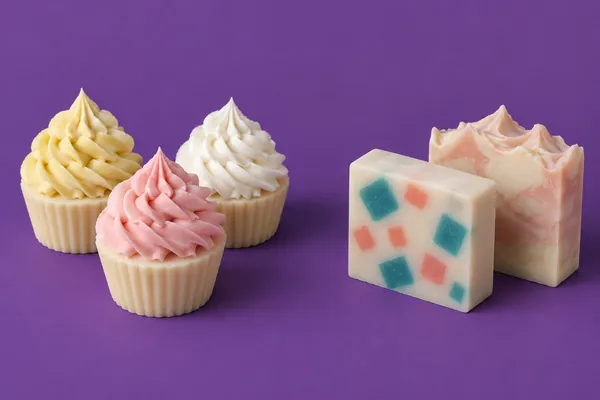
Embeds, textured tops and piping
Soap embeds that stay put and don't bleed, textured and botanical tops, piped frosting and soap cupcakes, and how to keep soda ash off the top.
Where these proportions come from
Adapted from Letcavage and Harden's oatmeal, milk and honey soap: their olive, coconut, palm and jojoba base at 5 % superfat and their rate of honey. Frozen whole milk replaces their water and buttermilk as the whole liquid, colloidal oatmeal replaces their ground oats, and their beeswax is left out because it sets in a batter kept this cool.
Formulation adapted from Natural Soap Making by Elizabeth Letcavage and Melissa Harden (Stackpole Books, 2013). The method and notes are ours.