Aleppo-style laurel and olive bar
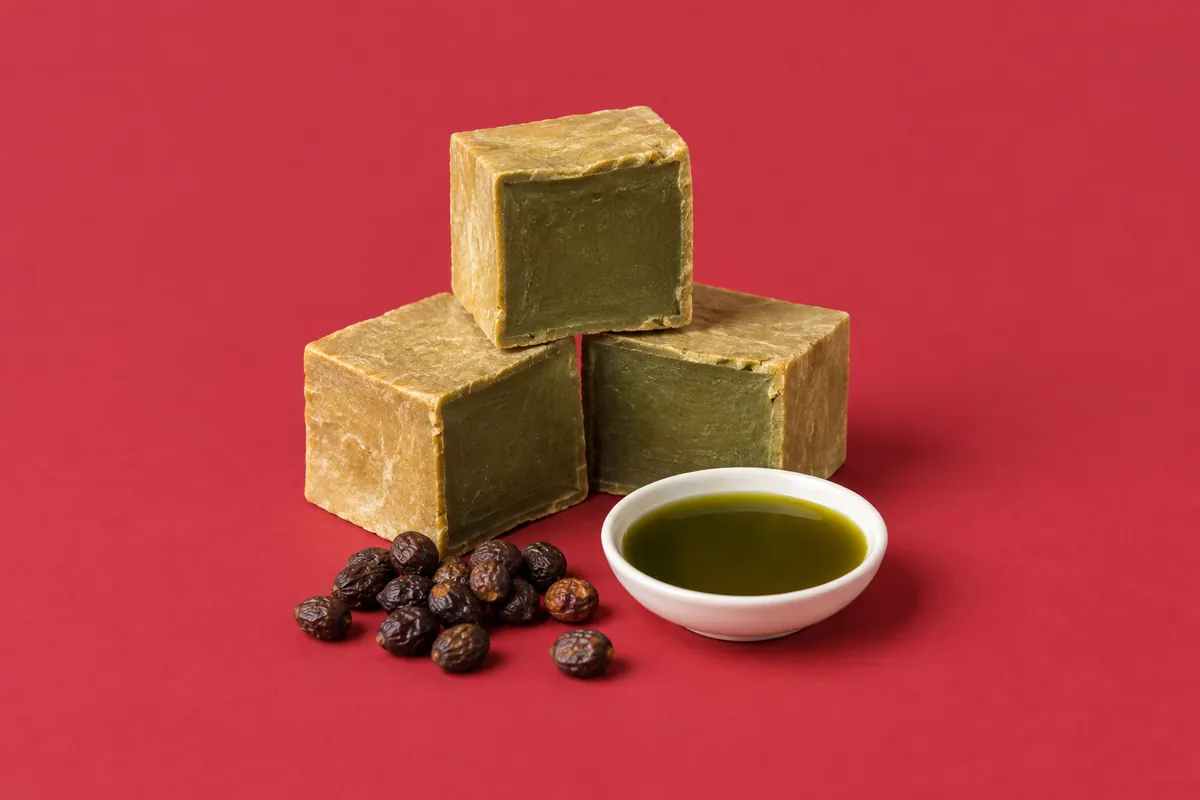
A home cold-process take on Aleppo soap: olive oil with a quarter laurel berry oil, which colours the bar green and scents it with bay. It needs no fragrance, but it does need time: cure it for six months, longer if you can wait.
- Skill
- Intermediate
- Method
- Cold process
- Batch
- 1000 g of oils about 1373 g of batter
- Hands-on
- 1 hour
- Cure
- 26 weeks
- Gel phase
- Either way gel or not, both work
What you need
For 1000 g of oils, which fills a 1.5 litre loaf mould. Weigh everything, liquids included.
| Olive Oil · 75.0 % | 750 g | 26.46 oz |
| Laurel Berry Oil · 25.0 % | 250 g | 8.82 oz |
| Sodium hydroxide (NaOH) · the lye, 100 % pure | 130.1 g | 4.59 oz |
| Distilled water · for a 35 % lye solution | 241.6 g | 8.52 oz |
| Rosemary extract (ROE) · stirred into the fresh oils, against orange spots during the long cure | 1 g | 0.04 oz |
- Superfat
- 5 %
- Temperatures
- Oils and lye solution at 38 to 43 °C (100 to 110 °F), warm enough to keep the laurel oil melted
Method
-
Get ready
Put on goggles, gloves and long sleeves, open a window and line a 1.5 litre loaf mould. Weigh 250 g laurel berry oil and 750 g olive oil into the pot, 1 g rosemary extract into a small dish, 241.6 g distilled water into the lye jug and 130.1 g sodium hydroxide into a dry container. -
Make the lye solution
Pour the sodium hydroxide into the water, never the water onto the lye, and stir until it runs clear, keeping your face away from the vapour. Let it cool to 38 to 43 °C (100 to 110 °F). -
Melt the laurel berry oil
Laurel berry oil is a soft, dark green solid at room temperature that melts at about 36 °C (97 °F). Warm it gently in the pot until it is clear, then stir in the olive oil and the rosemary extract and bring the oils to 38 to 43 °C (100 to 110 °F). -
Blend to light trace
Pour in the lye solution and stick blend in short pulses, stirring between them. Like castile, this batter is slow to thicken: keep going past the smooth, thin emulsion until a drizzle leaves a faint line on the surface. -
Pour and cover
Pour into the mould, tap it on the worktop to let air out, and cover it with a lid or board and a folded towel. The room will smell strongly of bay while you work; that is the laurel oil. -
Leave it for 48 hours or more
A bar that is three-quarters olive oil comes out of the mould soft. Leave it for at least 48 hours, and longer if it still dents under a finger. -
Unmould and cut
Unmould it with gloves on and cut it into bars, or into cubes if you want the traditional Aleppo shape. -
Clean up with your gloves on
Wipe the raw batter off the pot and tools with paper towels and put them in the bin, then wash everything in hot soapy water. -
Cure for six months
Stand the bars on a rack somewhere cool, dry and dark, with air all round, and turn them every few weeks. Give them at least six months, and a year if you can; the outside fades from green towards tan as they cure, while the inside stays green. -
Weigh a bar to follow the cure
Weigh one bar when you cut it and again every month. While it is still losing weight, it is still curing.
Tips
- Laurel berry oil is pressed from the fruit of the bay tree. It is not bay laurel essential oil, a distillate of the leaves that makes no soap at all. About 4 % of it, mostly volatile oil with a little unsaponifiable matter, does not become soap and stays in the bar on top of the 5 % superfat.
- The laurel oil scents the bar by itself, strongly and a little medicinally, so no essential oil is added. Some people are allergic to bay; if you might be, try a small piece before using the bar all over.
- The rosemary extract is there because the bar spends months on a rack. At 0.1 % of the oils, it held off orange discolouration in olive oil soap more than four times as long as plain soap in a controlled test.
- For a milder, cheaper bar, lower the laurel oil to 15 % and raise the olive oil to match. The two take different amounts of lye, so run the change through the calculator.
The oils
| Oil | Share |
|---|---|
| Olive Oil (virgin / refined / olive oil) | 75.0 % |
| Laurel Berry Oil | 25.0 % |
How it is made
| Process | Cold process |
| Alkali | NaOH |
| Superfat | 5 % |
| Water | lye water at 35 % |
| Iodine value | 82 |
| INS | 110 |
Why make it
Aleppo soap is among the oldest hard soaps still made: olive oil and laurel berry oil, cooked in the soap houses of Aleppo, cut into cubes and stacked to dry for six to nine months, a craft UNESCO added to its intangible heritage list in 2024. Tradition uses the one bar for face, body and hair, and its only scent is the laurel's. By our numbers this version is very mild, cleansing 5 and conditioning 77, with a low, creamy lather rather than big bubbles, which is why makers with dry or easily upset skin often reach for it; that reputation rests on long use, not on trials. The catch is patience: a bar that is three-quarters olive oil stays soft for months and is at its best after half a year or longer. Some people are sensitive to laurel oil, so try a small piece first.
Sources
- Craftsmanship of Aleppo Ghar soap · UNESCO, Representative List of the Intangible Cultural Heritage of Humanity, 2024
What tradition, makers' experience and research say about soaps like this, each labelled for what it is. It is not medical advice, and no soap treats a skin condition: if you have one, ask a doctor or pharmacist.
What the numbers say
- Lauric acid 4.8 %
- Palmitic acid 14.6 %
- Stearic acid 2.4 %
- Oleic acid 61.0 %
- Linoleic acid 15.0 %
- Other 2.5 %
Saturated : unsaturated 22 : 78
Computed from the fatty acids of the fats above. The bands are what the craft has settled on, not chemistry — a bar outside one is not wrong.
From the guides
All guides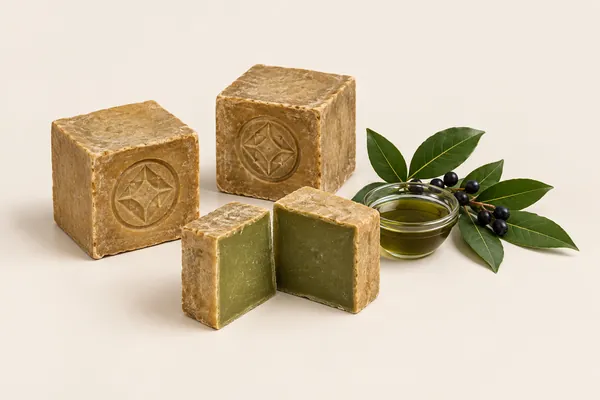
Aleppo soap and laurel berry oil
What Aleppo soap is, how the cauldron process differs from cold process at home, what laurel berry oil brings and why its SAP sits low, with recipes.
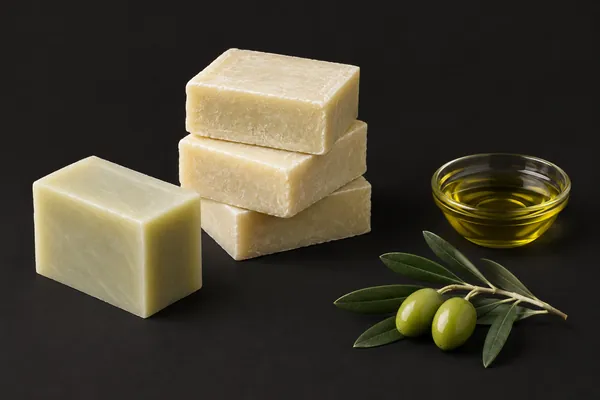
Castile soap: pure olive oil, and why it's worth the wait
What castile soap really is, why pure olive oil traces slowly and starts soft and slippery, how long to cure it, and a recipe with the calculator's numbers.
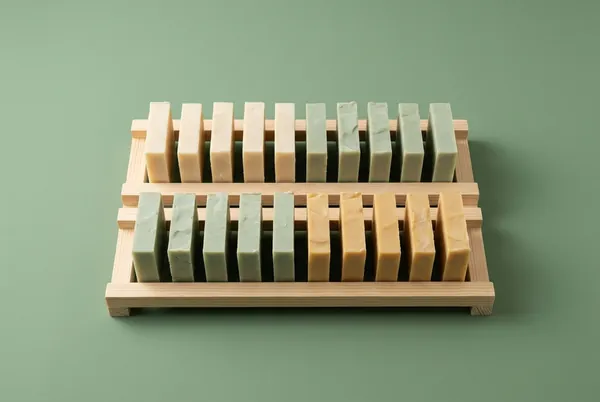
Curing and storing handmade soap
What curing does to cold process soap and what it doesn't, how long it takes, how to set bars up to cure, how to tell when they're done, and how to store them.
Guides with this recipe
Where these proportions come from
The Aleppo tradition fixes the oils: olive oil and laurel berry oil, which traditional makers use at anything from a few percent to 40 %. A quarter is above the common 20 % grade, for a stronger laurel character. Aleppo's own soap is boiled in the cauldron; this one is made by cold process at a 5 % superfat and cured for as long as the tradition asks.