Castile soap
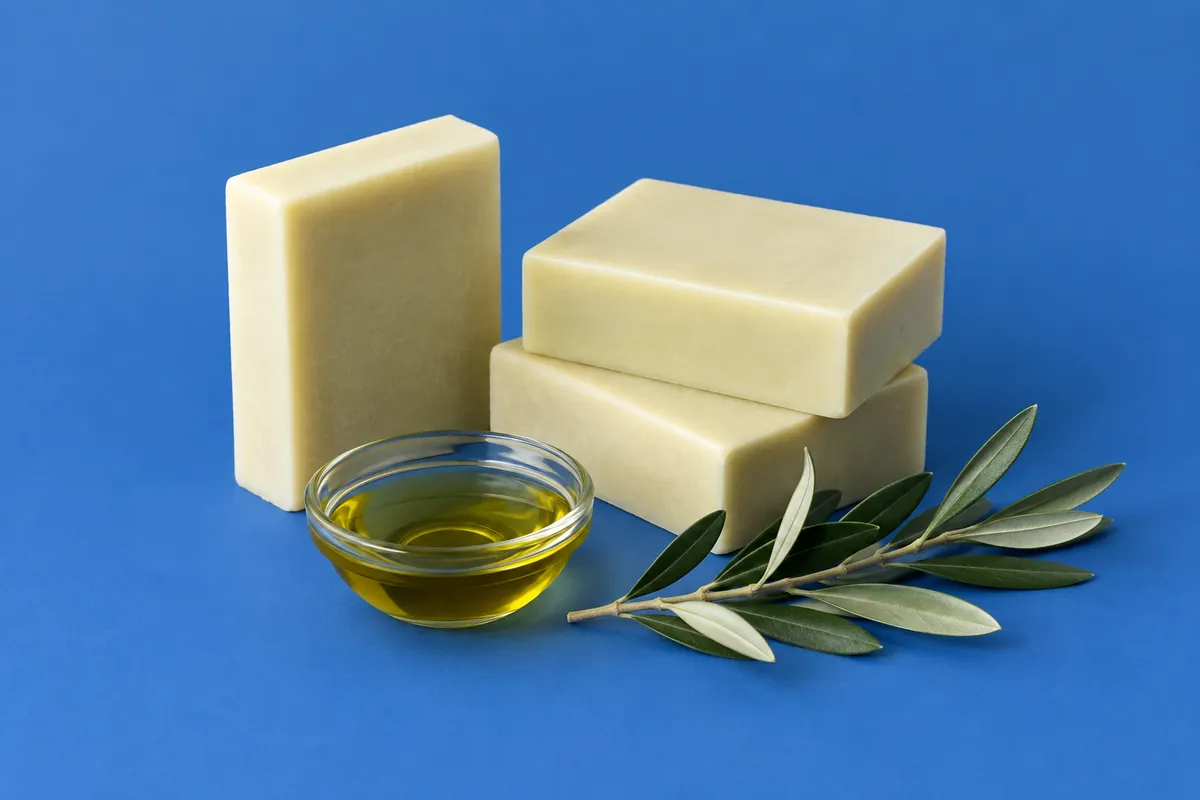
Soap made from olive oil and nothing else, as the name has meant since the fifteenth century. It traces slowly, starts soft and wants six months on the rack, and repays the wait with a hard, very mild bar and a low, creamy lather. Unscented, as castile often is.
- Skill
- Beginner
- Method
- Cold process
- Batch
- 1000 g of oils about 1390 g of batter
- Hands-on
- 1 hour
- Cure
- 26 weeks
- Gel phase
- Yes insulate the mould
What you need
For 1000 g of oils, which fills a 1.5 litre loaf mould. Weigh everything, liquids included.
| Olive Oil · 100.0 % | 1000 g | 35.27 oz |
| Sodium hydroxide (NaOH) · the lye, 100 % pure | 128.7 g | 4.54 oz |
| Distilled water · for a 33 % lye solution | 261.2 g | 9.22 oz |
- Superfat
- 5 %
- Temperatures
- Olive oil warmed to about 35 °C (95 °F), lye solution cooled to 35 to 45 °C (95 to 113 °F)
Method
-
Get ready
Put on splash goggles, nitrile gloves and long sleeves, open a window or turn on the extractor fan, and keep children and pets out of the room. Line a 1.5 litre loaf mould and set it level where it can stay undisturbed for three days. -
Weigh everything
Weigh 1000 g olive oil into the soaping pot, 261.2 g distilled water into a heat-safe jug and 128.7 g sodium hydroxide into a dry container with a lid. -
Make the lye solution
At the open window or under the fan, pour the sodium hydroxide slowly into the water, never the water onto the lye, and stir until it runs clear, keeping your face away from the vapour. Leave it to cool to 35 to 45 °C (95 to 113 °F), labelled and out of reach. -
Warm the oil
Warm the olive oil gently to about 35 °C (95 °F). Pure olive oil is slow to trace, and warm oil and lye trace sooner than cool ones. -
Combine
Pour the lye solution into the oil down the shaft of the stick blender, tap the blender on the bottom of the pot to let out trapped air, and keep the blade under the surface while it runs. -
Blend patiently to light trace
Blend in bursts of a few seconds and stir between them, for ten minutes or more if need be. The batter turns smooth and opaque long before it thickens: keep going past that point until a drizzle leaves a faint trail on the surface before it sinks. -
Pour and cover
Pour into the mould, tap it on the worktop to bring up air bubbles and smooth the top. Cover it with a lid or a sheet of card and a folded towel for the first day, so the loaf stays warm and firms up sooner. -
Leave it for 48 hours or more
Castile is ready to come out of the mould later than most soaps. Wait at least 48 hours, and longer if the loaf still dents under a gloved finger; a silicone mould that will not let go can go in the freezer for a few hours first. -
Unmould and cut
Unmould with gloves on and cut the loaf into bars about 2.5 cm (1 in) thick, about twelve in all. The cut faces may feel soft and a little slippery, which is normal for young castile. -
Clean up with your gloves on
Wipe the raw batter off the pot and tools with paper towels, put them in the bin, then wash everything in hot soapy water. -
Cure for six months
Stand the bars on edge on a rack somewhere cool, dry and dark, with air all round, and turn them every week or so. You can use one from about eight weeks, but castile is at its best after six months and keeps improving for a year. -
Weigh a bar to follow the cure
Weigh one bar the day you cut it and again each month. While it is still losing weight it is still curing; once the weight holds steady, it is ready.
Tips
- The calculator gives this bar hardness 17, cleansing 0 and bubbly lather 0, and every quality table calls pure olive soap too soft. The figures count only saturated fatty acids and cannot see a cure: a six-month castile bar is hard in the hand and very mild, with a low, creamy lather.
- To unmould it sooner, stir 1 teaspoon of 60 % sodium lactate per 454 g (1 lb) of oils, 14.5 g for this batch, into the cooled lye solution, and add it in the calculator so it counts the lactate's own water; more than that makes a brittle bar. For salted, stamped castile cubes scented with orange and black pepper, see our castile brine bar.
- Any grade of olive oil works. Extra virgin gives a greener bar and refined oil a paler one. Olive pomace oil traces faster but takes slightly less lye, so choose it in the calculator if that is what you have.
- Keep a bar in use on a draining dish. Castile turns soft and slimy if it sits in water, and firms up again as it dries.
The oils
| Oil | Share |
|---|---|
| Olive Oil (virgin / refined / olive oil) | 100.0 % |
How it is made
| Process | Cold process |
| Alkali | NaOH |
| Superfat | 5 % |
| Water | lye water at 33 % |
| Iodine value | 85 |
| INS | 106 |
Why make it
Olive oil alone gives the lowest cleansing figure on our scale, 0, with conditioning 82 and a low, creamy lather instead of big bubbles. That suits people who wash their hands often, find coconut-rich soaps drying, or want a bar with a single oil on the label. Castile has meant a fine, mild olive oil soap since English took the name from Spain in the fifteenth century, and its gentle reputation rests on that long use rather than on trials. Made unscented, it fits the dermatologists' advice to choose fragrance-free cleansers for dry, sensitive skin. Two honest limits: like every true soap it is alkaline, around pH 9 to 10, and the NHS advises people with eczema to wash with an emollient instead of soap. It also asks for patience: soft for weeks, at its best after six months.
Sources
- Castile soap · Merriam-Webster Dictionary
- Dermatologists' top tips for relieving dry skin · American Academy of Dermatology
- Evaluation of pH of Bathing Soaps and Shampoos for Skin and Hair Care · Tarun J. and others, Indian Journal of Dermatology 59(5):442-444, 2014
- Atopic eczema: treatment · NHS
What tradition, makers' experience and research say about soaps like this, each labelled for what it is. It is not medical advice, and no soap treats a skin condition: if you have one, ask a doctor or pharmacist.
What the numbers say
- Palmitic acid 13.8 %
- Stearic acid 2.8 %
- Oleic acid 69.0 %
- Linoleic acid 12.3 %
- Other 2.6 %
Saturated : unsaturated 17 : 83
Computed from the fatty acids of the fats above. The bands are what the craft has settled on, not chemistry — a bar outside one is not wrong.
Try it differently
5 variationsThe same soap with one thing moved. Each opens in the calculator ready to change again.
From the guides
All guides
Castile soap: pure olive oil, and why it's worth the wait
What castile soap really is, why pure olive oil traces slowly and starts soft and slippery, how long to cure it, and a recipe with the calculator's numbers.
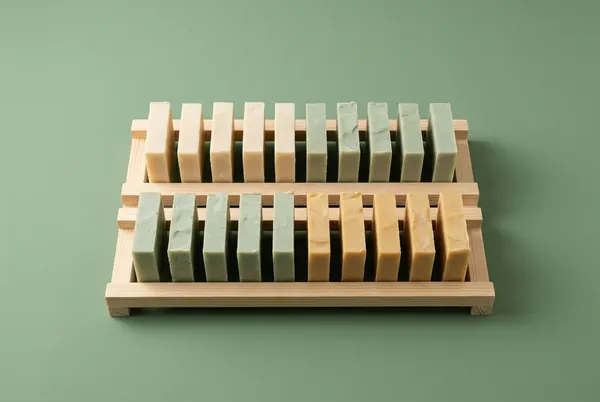
Curing and storing handmade soap
What curing does to cold process soap and what it doesn't, how long it takes, how to set bars up to cure, how to tell when they're done, and how to store them.
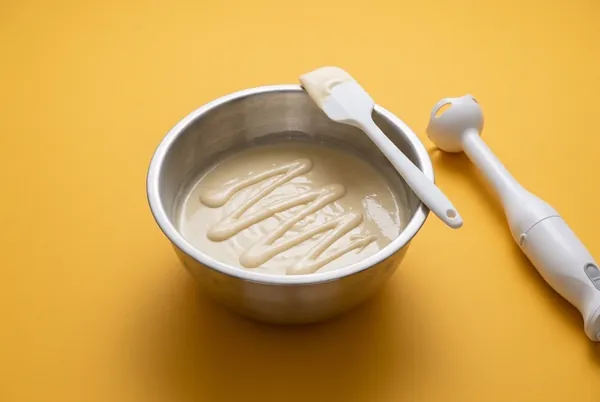
Trace: how to tell when soap batter is ready
What trace is, how to read emulsion, light, medium and thick trace, how to spot false trace, and what makes soap batter thicken faster or slower.
Guides with this recipe
Where these proportions come from
Named for the olive-oil soap of Castile in Spain, "castell sope" in English by the fifteenth century; olive oil alone is what defines it. Written at a 33 % lye solution rather than the older 38 % of the oils, which is about 25 %: Dunn (The Water Discount, 2008) found pure olive soap at a 25 % solution separated in the mould even with a trace accelerant, where a 33 % batch held. The method is ours.