Old-fashioned lard bar
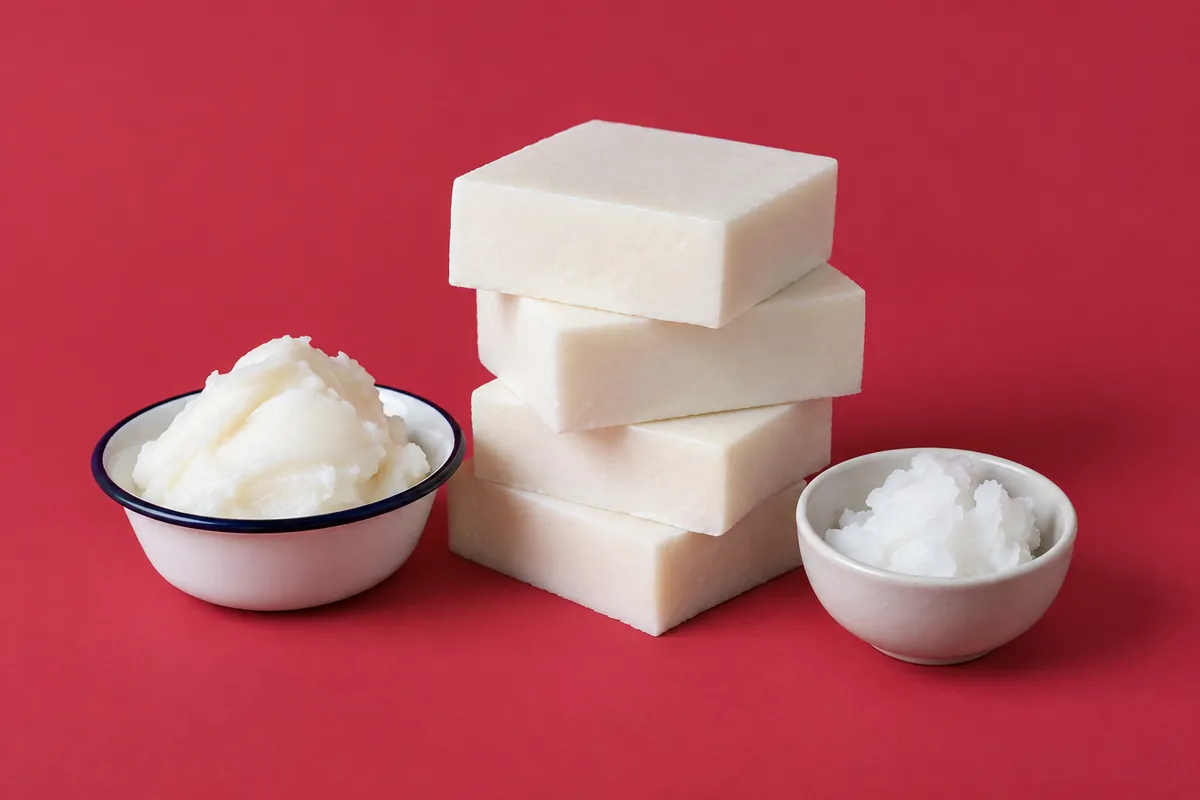
Lard and coconut oil and nothing else: the plain white bar that farmhouses made for generations, with the lye weighed so the soap comes out mild. Cheap, hard and creamy, with a gentle lather, and unscented.
- Skill
- Beginner
- Method
- Cold process
- Batch
- 1000 g of oils about 1430 g of batter
- Hands-on
- 1 hour
- Cure
- 6 weeks
- Gel phase
- Either way gel or not, both work
What you need
For 1000 g of oils, which fills a 1.5 litre loaf mould. Weigh everything, liquids included.
| Lard · 80.0 % | 800 g | 28.22 oz |
| Coconut Oil · 20.0 % | 200 g | 7.05 oz |
| Sodium hydroxide (NaOH) · the lye, 100 % pure | 141.7 g | 5.00 oz |
| Distilled water · for a 33 % lye solution | 287.8 g | 10.15 oz |
- Superfat
- 5 %
- Temperatures
- Fats at 38 to 43 °C (100 to 110 °F), lye solution anywhere from 32 to 43 °C (90 to 110 °F)
Method
-
Get ready
Put on splash goggles, nitrile gloves and long sleeves, open a window or turn on the extractor fan, and keep children and pets out of the room. Line or set out the mould where it can stay for two days. -
Choose good lard
Use fresh, white lard that smells of nothing. If it smells meaty or sour, the soap will too, so render your own in water or buy a fresher block. -
Weigh the fats
Weigh 800 g lard and 200 g coconut oil into the pot. -
Make the lye solution
Weigh 287.8 g distilled water into a heat-safe jug and 141.7 g sodium hydroxide into a dry container. By an open window, pour the lye slowly into the water, never the water onto the lye, and stir until clear; leave it to cool, labelled and out of reach. -
Melt the fats
Melt the lard and coconut oil together on the lowest heat until clear, then let them cool to about 40 °C (104 °F). -
Check the temperatures
Go ahead when the fats read 38 to 43 °C (100 to 110 °F) and the lye solution anywhere from 32 to 43 °C (90 to 110 °F). Much cooler and the lard starts to set, which thickens the batter before it has really traced. -
Combine and blend to light trace
Pour the lye solution into the fats down the shaft of the stick blender and blend in short pulses, stirring between them. Stop when the batter is opaque and a drizzle leaves a faint line on the surface. -
Pour and cover
Pour into the mould, tap it on the worktop to raise air bubbles, and cover it with a lid or board and a folded towel. Leave it undisturbed for a day. -
Clean up
With your gloves still on, wipe the batter off the pot and tools with paper towels into the bin, then wash them in hot soapy water. -
Unmould and cut
After 24 to 48 hours, when the loaf is firm, unmould it with gloves on and cut it into bars about 2.5 cm (1 in) thick. It will be bright white and still a little soft, which is normal for lard. -
Cure
Stand the bars on edge in a dry, airy place for six weeks, turning them now and then. Lard soap is mild early but keeps hardening for weeks, and the longer cure makes it last longer in use.
Tips
- This is a quiet-lathering bar, with small creamy bubbles rather than foam. For more lather, replace 5 % of the lard with castor oil and let the calculator work out the new lye.
- Supermarket lard is often partly hydrogenated so that it keeps longer. It still makes good soap and needs almost exactly the same lye; home-rendered leaf lard gives the whitest bar.
- Leave the loaf in the mould another day if it is soft after 48 hours: lard bars start softer than palm or tallow ones and firm up steadily.
The oils
| Oil | Share |
|---|---|
| Lard (pure rendered pork fat) | 80.0 % |
| Coconut Oil | 20.0 % |
How it is made
| Process | Cold process |
| Alkali | NaOH |
| Superfat | 5 % |
| Water | lye water at 33 % |
| Iodine value | 50 |
| INS | 160 |
Why make it
This is the soap of the old farmhouse. Lard came from the pig killed in December or January, lye was leached from hardwood ash, and the soap was stirred, poured and left for weeks before anyone used it (Discovery Park of America). Lard makes a white, hard bar, hardness 49 and creamy 34 on our scale, with a small, dense lather, and the fifth of coconut oil adds some bubbles. Weighing the lye for a 5 % superfat takes away the guesswork that made old lye soap harsh, and makers often find lard soap mild on the skin. It suits anyone who wants a plain, cheap, unscented bar for every day. The trade-offs are honest ones: it is not vegetarian, and it wants its full six weeks, getting harder and longer-lasting as it dries.
Sources
- 1800s lye soap recipe calls for one pig and one hickory tree · Clare Saum, Discovery Park of America: Museum and Heritage Park, 2020
What tradition, makers' experience and research say about soaps like this, each labelled for what it is. It is not medical advice, and no soap treats a skin condition: if you have one, ask a doctor or pharmacist.
What the numbers say
- Lauric acid 9.8 %
- Myristic acid 5.2 %
- Palmitic acid 21.8 %
- Stearic acid 12.6 %
- Oleic acid 37.5 %
- Linoleic acid 6.8 %
- α-Linolenic acid 1.2 %
- Other 7.8 %
Saturated : unsaturated 52 : 48
Computed from the fatty acids of the fats above. The bands are what the craft has settled on, not chemistry — a bar outside one is not wrong.
From the guides
All guides
Lard and tallow: soaping with animal fats
Why lard and tallow make hard, mild, creamy soap, how to render and store them at home, how beef, mutton and pork fat differ, and classic recipes.
Superfat and lye discount: why recipes leave some oil unsaponified
What superfat and lye discount mean, how the calculator applies them, where makers set them for each soap, and why oil added at trace isn't the oil left over.
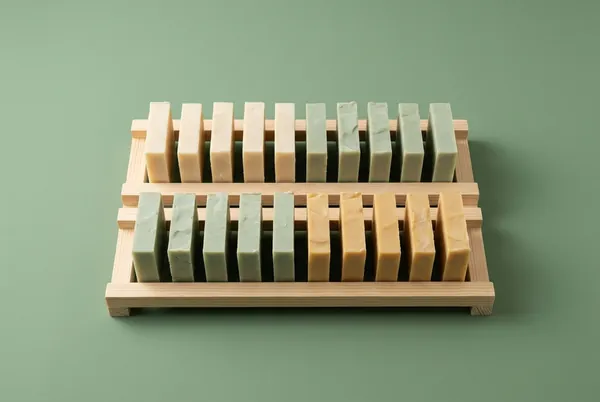
Curing and storing handmade soap
What curing does to cold process soap and what it doesn't, how long it takes, how to set bars up to cure, how to tell when they're done, and how to store them.
Guides with this recipe
Where these proportions come from
The farmhouse lard soap tradition, with two changes: a fifth of the fat is coconut oil for a fuller lather, and the lye is weighed for a 5 % superfat instead of judged by eye, as it had to be when lye was leached from wood ash.