Stout beer bar
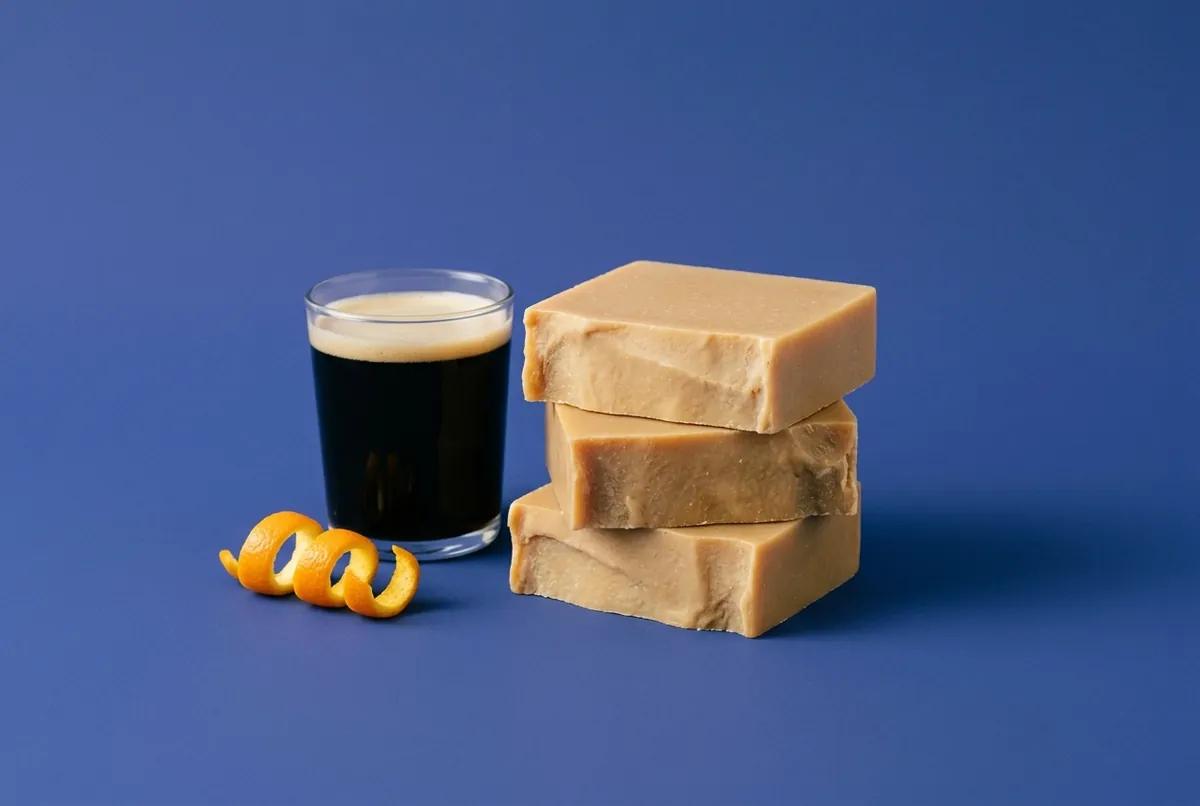
A palm-free everyday bar made with flat, boiled stout as all of its liquid and scented with sweet orange and cedarwood. The batter goes deep brown and cures to a creamy camel, and the beery smell fades as it cures.
- Skill
- Intermediate
- Method
- Cold process
- Batch
- 1000 g of oils about 1479 g of batter
- Hands-on
- 1 h 15 min
- Cure
- 6 weeks
- Gel phase
- No keep it cool
What you need
For 1000 g of oils, which fills a 1.5 litre loaf mould. Weigh everything, liquids included.
| Olive Oil · 30.0 % | 300 g | 10.58 oz |
| Coconut Oil · 30.0 % | 300 g | 10.58 oz |
| Sunflowerseed Oil - High Oleic Acid · 15.0 % | 150 g | 5.29 oz |
| Rice Bran Oil · 10.0 % | 100 g | 3.53 oz |
| Shea Butter · 10.0 % | 100 g | 3.53 oz |
| Cocoa Butter · 5.0 % | 50 g | 1.76 oz |
| Sodium hydroxide (NaOH) · the lye, 100 % pure | 140.1 g | 4.94 oz |
| Stout, flattened, boiled and frozen · all of the liquid; weighed after boiling and cooling | 309 g | 10.90 oz |
| Sweet orange essential oil · 2.0 % of the oils, at trace | 20 g | 0.71 oz |
| Atlas cedarwood essential oil · 1.0 % of the oils, at trace | 10 g | 0.35 oz |
- Superfat
- 6 %
- Temperatures
- Stout lye kept below 30 °C (86 °F); oils at 32 to 35 °C (90 to 95 °F) when it goes in
Method
-
Flatten and boil the stout
Open about 650 g of stout, two 330 ml bottles, into a large pan and leave it for a few hours to go flat. Simmer it uncovered for 20 minutes, watching it closely because it foams, then let it cool. -
Weigh and freeze it
Weigh 309 g of the cooled stout into an ice-cube tray and freeze it solid. Boiled beer goes mouldy at room temperature, so freeze it the day you boil it. -
Get ready
Put on goggles, gloves and long sleeves, open a window or run the extractor, because stout and lye smell strongly together, then weigh the oils and lye and line the mould. -
Melt the oils
Melt the coconut oil, shea butter and cocoa butter, stir in the olive, sunflower and rice bran oils, and let them cool to 32 to 35 °C (90 to 95 °F), still clear. -
Add the lye to the frozen stout
Put the stout cubes in a heat-safe jug standing in iced water and sprinkle in the lye a spoonful at a time, stirring until each dissolves; never pour the stout onto the lye. Take 10 to 15 minutes and keep it below 30 °C (86 °F); a little foam and a yeasty smell are normal. -
Strain and combine
With the oils at 32 to 35 °C (90 to 95 °F), pour the cold stout lye through a stainless steel sieve into them, which shows you no lye is left undissolved in the dark liquid, and stick blend in short bursts to light trace. -
Scent it
Stir in the orange and cedarwood oils by hand until evenly mixed. -
Pour
Pour into the mould, tap it on the bench to release air, and smooth the top. -
Don't insulate
Leave the mould uncovered in a cool room: the stout's sugars heat the loaf on their own. If the top domes or cracks, move it into the fridge. -
Unmould and cut
Unmould with gloves on after 24 to 48 hours, when the loaf is firm, and cut it into bars. -
Cure
Cure the bars on a rack with air around them for six weeks, turning them now and then; the beery smell fades in the first few weeks.
Tips
- Boiling doesn't take out all the alcohol: after 20 minutes of simmering over a third of it is still there. The boil is for the bubbles, which foam up when the lye hits them, and to cut the alcohol, not to remove it.
- Frozen stout and an ice bath do more than keep the colour: sugars heated above 84 °C (183 °F) with lye can give off carbon monoxide, and lye stirred into room-temperature beer can get that hot.
- Ordinary sweet orange oil fades from cold process soap within weeks. A 5-fold or 10-fold orange lasts longer, and the cedarwood helps anchor it.
- A paler beer gives a paler bar; any stout or porter gives about this colour.
The oils
| Oil | Share |
|---|---|
| Olive Oil (virgin / refined / olive oil) | 30.0 % |
| Coconut Oil | 30.0 % |
| Sunflowerseed Oil - High Oleic Acid | 15.0 % |
| Rice Bran Oil | 10.0 % |
| Shea Butter | 10.0 % |
| Cocoa Butter (Theobroma Oil) | 5.0 % |
How it is made
| Process | Cold process |
| Alkali | NaOH |
| Superfat | 6 % |
| Water | lye water at 33 % |
| Iodine value | 58 |
| INS | 151 |
Why make it
A palm-free everyday bar, cleansing 20 and conditioning 56 on our scale. Those numbers count only the oils; the sugars left in stout add bubbles on top, which is why makers have long used beer for its lather (Anne-Marie Faiola). It cures to a creamy camel colour, and the beery smell fades within a few weeks, leaving orange and cedarwood. People make it as a gift for beer drinkers, for the story, or to use a home brew. Beyond the lather, any benefit claimed for hops or brewer's yeast in soap rests on tradition rather than evidence, since most of what beer brings is water and sugar. It is a slightly fiddly bar to make, because the stout and the lye must be kept cold.
Sources
- Anne-Marie Faiola, Pure Soapmaking · Storey Publishing, 2016
What tradition, makers' experience and research say about soaps like this, each labelled for what it is. It is not medical advice, and no soap treats a skin condition: if you have one, ask a doctor or pharmacist.
What the numbers say
- Lauric acid 14.8 %
- Myristic acid 5.7 %
- Palmitic acid 10.9 %
- Stearic acid 8.5 %
- Oleic acid 46.1 %
- Linoleic acid 9.6 %
- Other 5.7 %
Saturated : unsaturated 44 : 56
Computed from the fatty acids of the fats above. The bands are what the craft has settled on, not chemistry — a bar outside one is not wrong.
From the guides
All guides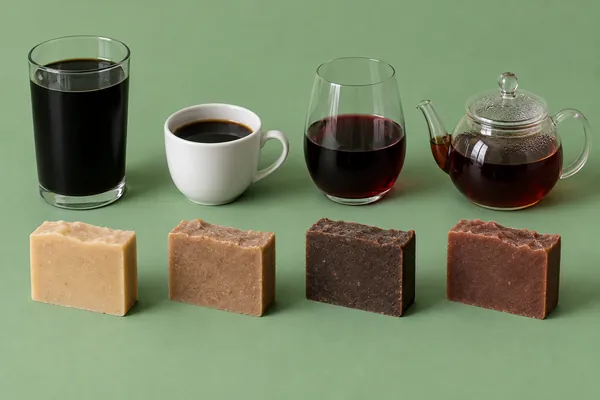
Beer, wine, coffee, tea and juice in soap
Using beer, wine, coffee, tea or juice in place of soap's water: how to prepare each one, add the lye safely, and what the calculator does with the liquid.
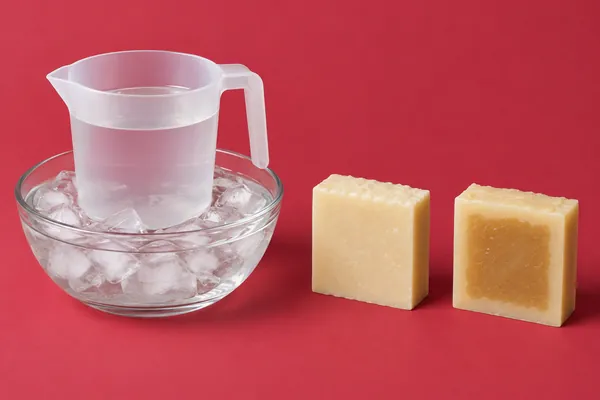
Heat in soapmaking: lye solution, soaping temperature and gel
How hot a lye solution gets and why; where a loaf's own heat comes from; what decides gel; and safe temperatures for milk, sugar and melt and pour.

Scenting soap: essential oils and fragrance oils
How much essential or fragrance oil to use in soap, what ounces per pound mean in percent, the IFRA limits for common essential oils, and EU allergen labelling.
Where these proportions come from
David Fisher's palm-free base, the one he uses for his beer soaps, with high-oleic sunflower oil in place of his sunflower oil for a longer shelf life, at a 6 % superfat. Flat, boiled stout replaces all the water, as it does in his, Faiola's and Corley Barto's beer bars.
Formulation adapted from The Complete Photo Guide to Soap Making by David Fisher (Creative Publishing International, 2018). The method and notes are ours.