First-batch palm-free bar
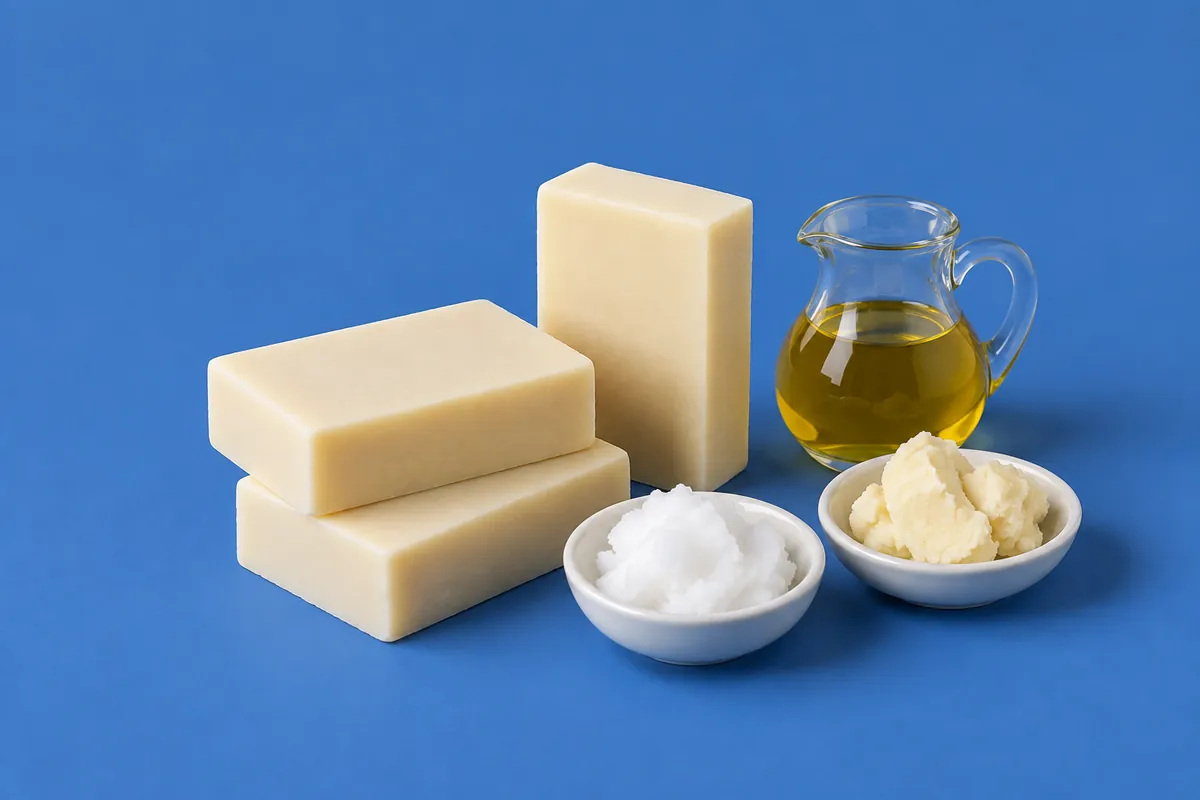
The soap to make first: mostly olive oil, with coconut oil for lather and a little shea butter and castor oil, unscented and uncoloured. It is the blend our calculator opens with, traces slowly enough to give you time, and cures into a mild, lathery everyday bar.
- Skill
- Beginner
- Method
- Cold process
- Batch
- 1000 g of oils about 1421 g of batter
- Hands-on
- 1 h 15 min
- Cure
- 4 weeks
- Gel phase
- Either way gel or not, both work
What you need
For 1000 g of oils, which fills a 1.5 litre loaf mould. Weigh everything, liquids included.
| Olive Oil · 60.0 % | 600 g | 21.16 oz |
| Coconut Oil · 25.0 % | 250 g | 8.82 oz |
| Shea Butter · 10.0 % | 100 g | 3.53 oz |
| Castor Oil · 5.0 % | 50 g | 1.76 oz |
| Sodium hydroxide (NaOH) · the lye, 100 % pure | 139.1 g | 4.91 oz |
| Distilled water · for a 33 % lye solution | 282.4 g | 9.96 oz |
- Superfat
- 5 %
- Temperatures
- Oils and lye solution each between 32 and 43 °C (90 and 110 °F); the two need not match
Method
-
Clear the space and put on your gear
Read the whole method once before you weigh anything. Open a window or turn on the extractor fan, send children and pets out of the room and clear the worktop. Put on splash goggles, nitrile gloves and long sleeves, and keep them on until the soap is in the mould and the tools are clean. -
Weigh everything
Zeroing the scale each time, weigh 250 g coconut oil and 100 g shea butter into the pot, 600 g olive oil and 50 g castor oil into a jug, and 282 g distilled water into the heat-safe lye jug. Weigh the 139.1 g of sodium hydroxide last, into a small, completely dry container, and close its tub straight away. -
Make the lye solution
At the best-ventilated spot you have, pour the sodium hydroxide slowly into the water, never the water onto the lye, and stir until the liquid turns clear. It heats up fast and gives off a harsh vapour for the first minute or so, so keep your face away from it. Leave it there to cool, labelled and out of reach. -
Melt the solid fats and add the liquid oils
Warm the pot of coconut oil and shea butter on the lowest heat until just melted, taking it off while a few lumps remain; they finish melting in the warmth. Then pour in the olive and castor oils, which bring the temperature down. -
Check both temperatures
When the oils are clear and both they and the lye solution read between 32 and 43 °C (90 and 110 °F), you are ready; the two need not match. Put the mould where it can stay for two days, level and out of reach. -
Pour the lye solution into the oils
Pour it slowly down the shaft of the stick blender or over the spatula, so it doesn't splash. Tap the blender gently on the bottom of the pot to let trapped air out before switching it on, and keep the blade under the surface whenever it runs. -
Blend in short pulses to light trace
Pulse for a few seconds, stir with the blender off, and repeat. Within a few minutes the batter turns from oily and see-through to opaque and creamy; stop at light trace, when a drizzle leaves a faint line on the surface that sinks back within seconds. -
Pour, tap and cover
Pour the batter into the mould, scraping the pot clean with the spatula, and tap the mould firmly on the worktop a few times to let air bubbles rise. Cover it with its lid or a board and lay a folded towel over it. It will get warm, and the middle may turn darker and glossy for a few hours: that is gel phase, and it is fine either way. -
Clean up with your gloves on
Wipe the raw batter off the pot and tools with paper towels and put them in the bin, not the sink. Then wash everything in hot soapy water and rinse the lye jug under plenty of running water. -
Unmould and cut
After 24 to 48 hours, when the loaf is firm to a pressed finger and has pulled away from the sides, put your gloves back on and unmould it. Cut it into bars about 2.5 cm (1 in) thick, twelve to fourteen of them; if it still feels soft, give it another day first. -
Cure for four to six weeks
Stand the bars on edge on a rack or on baking paper, a finger's width apart, somewhere dry, airy and out of the sun, and turn them every few days. They are ready after four weeks, and harder and milder after six.
Tips
- Make it exactly as written, and make it twice before you change anything. Never swap one oil for another without running the recipe through the calculator again: each oil takes its own amount of lye.
- If your scale reads only whole grams, weigh 139 g of lye rather than 140 g. Rounding the lye down leaves a little more oil in the bar; rounding it up eats into the superfat.
- If lye solution or raw batter touches your skin, rinse it under running water at once for at least 15 minutes; in an eye, rinse for at least 30 minutes and get medical help. Use water, never vinegar.
- Still thin and streaky after ten minutes of pulsing? The batter has probably cooled below 32 °C (90 °F): warm the pot gently and keep pulsing.
The oils
| Oil | Share |
|---|---|
| Olive Oil (virgin / refined / olive oil) | 60.0 % |
| Coconut Oil | 25.0 % |
| Shea Butter | 10.0 % |
| Castor Oil | 5.0 % |
How it is made
| Process | Cold process |
| Alkali | NaOH |
| Superfat | 5 % |
| Water | lye water at 33 % |
| Iodine value | 62 |
| INS | 143 |
Why make it
The bar to learn on. Mostly olive oil, it traces slowly and forgives a slow pair of hands, and a quarter coconut oil gives it a proper lather. On our scale it cleanses at 17 with conditioning 62, a mild everyday bar for hands and body, and it has no scent or colour, so nothing hides a mistake and it suits anyone who avoids fragrance. Many makers leave out palm oil over deforestation: the IUCN found oil palm expansion a major driver of tropical forest loss, though it also warns that switching to other oil crops tends to move the damage rather than end it. Expect a slightly soft bar at four weeks that keeps improving for months.
Sources
What tradition, makers' experience and research say about soaps like this, each labelled for what it is. It is not medical advice, and no soap treats a skin condition: if you have one, ask a doctor or pharmacist.
What the numbers say
- Lauric acid 12.3 %
- Myristic acid 4.7 %
- Palmitic acid 10.9 %
- Stearic acid 6.7 %
- Ricinoleic acid 4.4 %
- Oleic acid 48.2 %
- Linoleic acid 8.6 %
- Other 5.3 %
Saturated : unsaturated 38 : 62
Computed from the fatty acids of the fats above. The bands are what the craft has settled on, not chemistry — a bar outside one is not wrong.
From the guides
All guides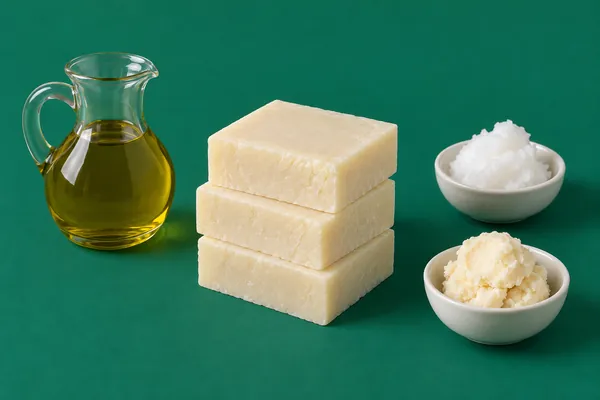
Your first cold process soap, step by step
A complete first batch of cold process soap: one simple recipe with exact lye and water for 500 g and 1 kg of oils, and every step from goggles to cure.
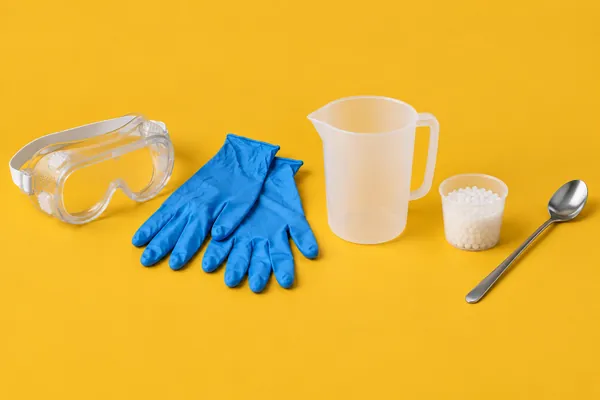
Handling lye safely
How to handle sodium hydroxide at home: splash goggles and gloves, lye into water, safe containers and storage, and first aid that works (water, not vinegar).
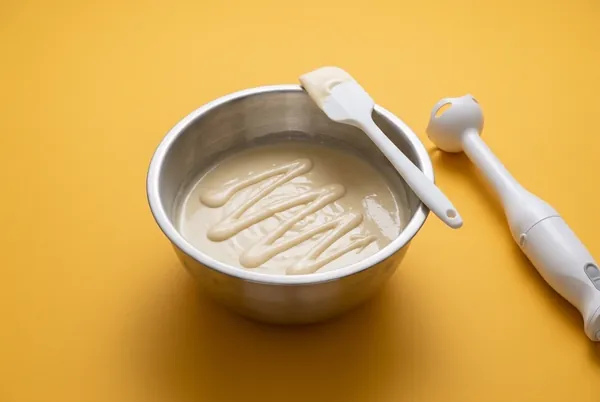
Trace: how to tell when soap batter is ready
What trace is, how to read emulsion, light, medium and thick trace, how to spot false trace, and what makes soap batter thicken faster or slower.
Guides with this recipe
- Choosing the oils for your first soap
- Curing and storing handmade soap
- Fatty acids and soap qualities: what the numbers mean
- How soap is made: what happens when oil meets lye
- Palm-free soap: what takes palm oil's place
- The equipment you need to make soap
- Using a lye calculator: every number explained
Where these proportions come from
Our own formulation, and the blend our calculator opens with: olive oil for a mild bar and a slow, forgiving trace, a quarter coconut oil for lather, and a little shea butter and castor oil for a firmer bar and creamier bubbles. Even if every oil sits at the top of its published saponification range, the bar keeps about 2 % of its oil unsaponified.